Yarvin: A Gentle Introduction
The manic pixie nymph of the early internet
Summary: Peter Banks introduces Curtis Yarvin's political philosophy, arguing that Yarvin sees modern liberal democracies as effectively controlled by a decentralized "Cathedral" of cultural and educational institutions rather than elected officials, and that progressivism functions as a quasi-religious state ideology. Yarvin proposes authoritarian alternatives grounded in formalism and corporate sovereignty, particularly his "Patchwork" vision of thousands of independent micro-states where exit replaces democratic voice. Banks presents Yarvin's worldview while offering critical disagreements and reflecting on Yarvin's personal intellectual influence as a powerful critic of modern liberalism's hidden power structures.
I’ve been wanting to write an article on Curtis Yarvin for a while now. As a matter of fact, I’ve already written two full articles—one in 2024 and another in 2025—which I opted, almost certainly for the better, not to publish. But the more I think about it, the more I feel as if not writing an article about him is a little bit cowardly. Because, and I’ll drop the poison here, I actually really admire Mencius Moldbug, and he has been one of the most influential philosophers on the way I think about the world.
Since my audience is almost perfectly split between right- and left-wingers, something I am extremely proud of, I now feel the need to “justify” the above so as not to forever taint your perspective of me, and hopefully, if you read this article, I will do that. But I also want to make something clear up front: the purpose of today isn’t to dismantle or debunk Yarvin, although I do often disagree with him, instead I want to honestly represent his worldview, as expressed in the late 2000s under the pen name Mencius Moldbug, before getting into my thoughts and history with him.
As with my prior “Gentle Introductions” on Nietzsche and Carlyle, my goal here is, more than anything, to try and correct a record I feel has become substantively confused. And separate the signal from the noise.
Curtis Yarvin presents the unique problem for anyone claiming to represent his work in that he is still very much alive. As a matter of fact, I hear he is steamrolling conversations all across America right now. To compound his status as a living, breathing, Human, Yarvin also holds the unique “privilege” of having been thrust into the stream of history just in time to be the court jester for Trump’s continuing pool party in the Rubicon.

This means that he became an object of fascination on both the left and the right as some modern prophet of doom. Trumpism’s lack of ideological coherence has long meant that liberals, who are quite ideological, feel the need to find a deeper core, and for a moment Yarvin became this ~logic~.
In early 2025, as DOGE tore through the executive and MAGA was on the march, people on both the Left and the Right found in Yarvin an apparent justification for the carnage. And so he inevitably became the platonic ~debunkee~ for anyone wanting to express their frustration at Trump by surrogate. Tens of thousands of words were penned at the time in hopes of dismantling—or defending—him, as if his destruction would also destroy the intellectual core of Trumpism and somehow dismantle the thing itself.
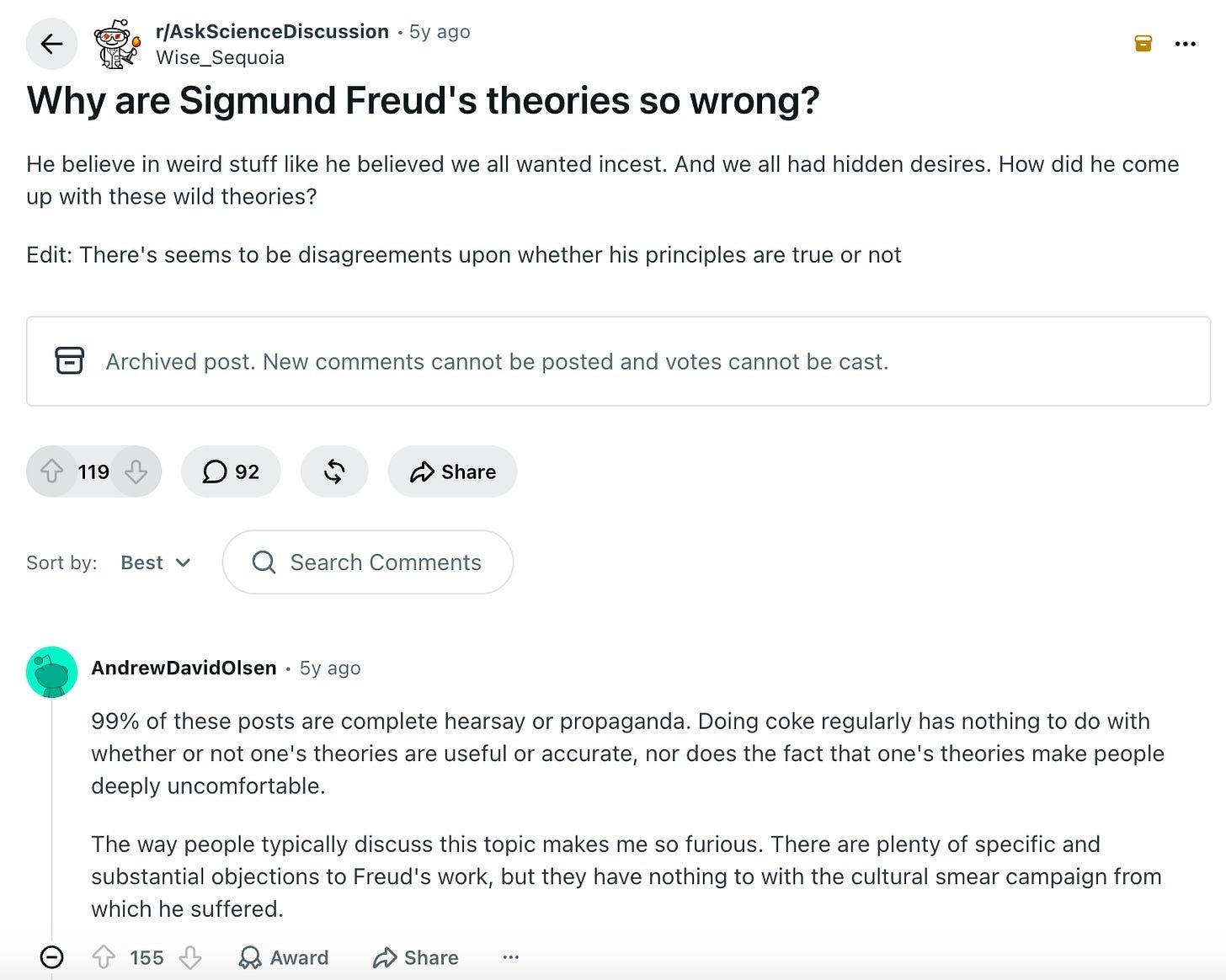
One of the results of this was that Yarvin has taken on something of a Freudian character, where it is fashionable to know the problems with his ideology without really having a coherent idea of what he actually believes.
To further complicate the situation, Curtis Yarvin is, in my opinion, actually very difficult to cleanly nail down ideologically. If you spend enough time with a writer you get to know their idiosyncrasies well enough to see the broader picture. But to the layperson his writing is, often purposefully, obtuse, and poorly edited. Still as I said a broad picture does emerge which is something like that of the guys who post Lee Kuan Yew edits.

In other words, he is an authoritarian developmentalist who believes a powerful executive is necessary for competent governance. Often he calls this monarchism and sure, you can squint at it and see the shape of a monarch, but they look much more like Napoleon III than Louis XIV or Nicholas II.
I’m sure he’s written about China before, although I’ll admit to never having seen a full article on them by him. Nevertheless, the CCP, without the aesthetics of the cultural left, would be his ideal form of government. Still, he could reasonably chime in and say:
“You are wrong, as expressed in this article you missed from 2014 where I discreetly outlined a preference for Putinist authoritarianism instead!”
Yarvin has done so many interviews, written so many articles, tweeted so many half-baked thoughts, and otherwise shared his opinion in so many places it would literally take a lifetime to just internalize it all. Meaning that despite my best efforts writing this article is a little like walking blindfolded into a minefield.

So before I take my inaugural steps on that voyage, let me be clear, this is only a gentle introduction I’ve combined with some of my own reflections.
Most of the quotes for this piece were drawn from the following works: Patchwork, Moldbug on Carlyle, How Dawkins Got Pwnd, A Gentle Introduction to Unqualified Reservations, and an Open Letter to Open-Minded Progressives. As with any summary, I highly recommend you read them all yourself.
The Red Pill

Basically everything Yarvin wrote is an attempt to answer the question of why liberalism “won” so absolutely in all of our culture-making institutions, and why The Science™ often seems to contort itself, without any evidence of external manipulation, into justifying progressive causes?
Of course many other people have grappled with this same question and either arrived at the conclusion that liberals did not ~win~ — in the sense that they do not actually dominate society — or that their victory, and the apparent contortions in scientific progress, is simply the result of liberalism being, if not obviously then inevitably, true.
Yarvin of course doesn’t share this opinion. Instead he argues that progressivism has won by de facto becoming our state church, and that much of society is structured to hide this fact from us. And if our state religion controls the narrative how can we know it is actually as good as it says it is?
“In 1938, three systems of government were contending for global supremacy. One of them is still around: yours. Anglo-American liberal democracy. Had military luck favored either of the others—National Socialism or Marxist–Leninism—we can also be sure that it would have discovered and reveled in its foes’ every misdeed, and that it would have approached its own, if at all, tentatively and ambiguously.
If only one can survive, at least two must be illegitimate, and irredeemably criminal. And the survivor will certainly paint them as such. But suppose all three are irredeemably criminal?”
Yarvin asks you to sort societies by the relationship between opinion and power, and offers three types:
“Basically, a type 1 society is a government in which the State controls the press and the universities. A type 2 society is one in which the press and the universities control the State. It is easy to tell the two forms apart, but the customer experience is pretty much the same.”
A Type 3 society — Popper’s open society, where ideas compete freely and no one owns the truth — is what America believes itself to be. Yarvin’s wager is that America is in fact Type 2: a society in which the information organs have captured the state, not by conspiracy but by a set of shared incentives.
“The type 2 society is the consensus society. Its hallmark is the phenomenon of spontaneous coordination. You might call it Gleichschaltung without Goebbels.”
Gleichschaltung, or coordination, was the process through which the Nazi regime restructured society in the early 1930s. Much of it, as articulated by Ian Kershaw was achieved through a process of people “working towards the Führer,” meaning that across German society people at all levels willingly and proactively restructured their own universe to be in accordance with National Socialist thought, or what they believed was the inner desire of Hitler.
The Cathedral

This system of spontaneous coordination is Yarvin’s central and most influential idea. The consensus society has constructed an entire ecosystem — referred to as “The Cathedral” — of quasi-governmental organizations from which it draws power and influences society. Think of places like academia, or the prestige press, or the bureaucracy, which informs how policy is actually implemented and sets the cultural consensus and boundaries of discussion.
“Here at UR, we sometimes call it the Cathedral—although it is essential to note that, unlike an ordinary organization, it has no central administrator.”
“And the left is the party of the educational organs, at whose head is the press and the universities. This is our 20th-century version of the established church.”
How does an orthodoxy enforce itself with no enforcer? By selection. Everyone who rises through the credentialing system has been selected for the same opinions; holding them is rewarded with hiring, funding, publication, prestige; departing from them is punished severely. You can think of this like any Darwinian selection environment. Since only beliefs that accumulate more power, or at least retain power, survive from t into t + 1, gradually over time the Cathedral has come to believe, simultaneously everywhere, in the same subset of things that maximize its power. The consensus it produces is therefore not “the set of all reasonable ideas,” as it imagines, but something narrower:
“I think the answer is that the Synopsis includes only political propositions whose adoption tends to strengthen the Cathedral, and weaken its enemies. It rejects and opposes all other propositions.”
Hence the deflationary definition: “To be progressive is simply to support the Cathedral and the Synopsis.” And because the selection pressure runs only one way — no resource-distributing institution rewards rightward motion — the system has an inevitable direction.
“Cthulhu may swim slowly. But he only swims left.”
The result of this is that more and more of the de facto power in society has been sucked up by the Cathedral, leaving our de jure organs for exercising sovereignty increasingly anemic and incapable. What is important here is that the way people think power works in America, and the way it actually does, have little relationship with each other. We “all” believe that power, or sovereignty, ultimately resides in the hands of the ~people~, and through them is exercised by elected officials. But Yarvin would argue that pretty obviously isn’t true at bottom. Not only is the cultural tempo and range of acceptable views set by elite tastemakers, who are overwhelmingly progressives, but often politics seems to barely matter in reality.
You can conjure the following thought experiment. Suppose for a second that you forgot we had held an election, maybe you don’t follow the news that closely. Would you be able to tell power had changed hands? In how many elections can you say yes? For me the only answer might be Trump II, since I knew some people who lost their jobs. But I also live in the DC area; for most of this country the honest answer is probably zero.
Our politicians like to talk a big game but when they enter power they are always immediately hamstrung by an inertia that they either fold to or are crushed by. It is the Cathedral which ultimately decides how policy looks. If you wanted to know what policy in 2010 was going to look like back in 1995 you would have been much better served chatting it up with socialites in NYC or students at Stanford than listening to any politicians’ promises.
The elected government is thus theater, as in Hitchhiker’s Guide to the Galaxy, and the real administrative machine functions the same, no matter who sits in the White House.
“The progressive is always the underdog in his own mind. Yet, in objective reality, he always seems to win in the end.”
Protestantism minus Christ
So what exactly is this orthodoxy? Yarvin sees liberalism as a more potent adaptation of Anglo-Puritan Christianity. In “How Dawkins Got Pwned” he settles on Universalism for the religious impulse and I think it is my favorite of his titles, although he has an annoying habit of changing his names for things. This religion has hijacked global culture by exploiting a vulnerability in our separation of church and state; just don’t talk about God!
“One of the most adaptive features of M.42 is that nontheistic or secular Christianity can be propagated by American official institutions, which are constitutionally prohibited from endorsing its ancestor and competitor, M.41 or theistic Christianity.”
But even if we remove theism this new ~species~ of belief is still thoroughly religious, and more specifically thoroughly Protestant. We, as in Anglo-Americans such as myself, have inherited this religion and are relatively well adapted for it. And we have carried it with us by the sword across the entire world.
“All legitimate mainstream thought on Earth today is descended from the American Puritans, and through them the English Dissenters.”
Once progressivism is seen as a faith, its enforcement behavior becomes simply another example of the protection of sacred things:
“Thus what we call hate speech is merely a 20th-century name for the age-old crime of blasphemy.”
If you’re skeptical of this, one way to make it a little easier is to imagine that tomorrow every progressive in “The Cathedral” — probably less than a million people or ⅓ of a percent of our population — was replaced by a born-again Christian. And all of our progressive cultural objects were replaced with symbols from Christianity. So the pride flags now show crosses, and the little poster in the library saying “everyone is welcome here” instead says “Jesus died for your sins.” It would immediately be obvious you were living in a religious theocracy.

They continued to fly this at Stanford’s Green Library almost the whole time I was there
In other words Americans reside within what “can be fairly described as a progressive atheocracy.” But by accepting the mantle of religious authority without openly admitting to it “The Cathedral is the apotheosis of chutzpah. It is always poisoning its parents, then pleading for clemency as an orphan.”
The forbidden fact
There is nothing more clearly emotionally important to Yarvin throughout his work than the universalist dogma of fraternism — “the belief that all men men and women are created born equal.”
Or to put it another way, the belief in human neurological uniformity (HNU). Or that humans are all basically the same blank slates upon which experience is encoded.
HNU is hugely powerful in society, and it has grown more powerful for most of my lifetime to the point that it is, quite literally, illegal in many countries to question. The problem is of course that it is less well empirically substantiated than most of you probably think.
“What, sir, is your evidence for HNU? Oh, you don’t have any. I see. Once again, we find our new friend—the mainstream crank.”
Humans cognitively differ from each other in important ways, and there is no a priori reason to think that humans differ any less cognitively than we differ physically (I’ll let you decide how much that is). His argument here is less that HNU is false than that it has never been established by evidence — instead the Cathedral “won” by shifting the burden of proof:
“What we have here is a factual proposition which has swept to dominance not through the presentation of any evidence, but by the simple trick of reassigning the burden of proof to rest solely on those who doubt it. It is not the fraternists who have to demonstrate that fraternism is true. It is the afraternists who have to demonstrate that it’s false.”
But why is HNU so important to the Cathedral, especially if it is false? On paper Universalism believes itself to be the product of only common sense reason, open to examination and critique, but on this topic, at least, that seems to be untrue. The answer is again the evolutionary dynamics of power. If humans are all cognitively identical, then any inequality is an immediate a priori justification for the state, or ~society~ more generally, to intervene. And so since HNU gives the Cathedral more power, and gives a tool to reduce the power of its competitors, it is selected for, irrespective of — perhaps even because of — the empirical facts.
Throughout his work he attempts to separate the moral and evidentiary dynamics of HNU which we have all been so thoroughly inoculated to blending by claiming that to notice human inequality is an act of perception, not of cruelty, and dictates nothing.
If you disagree with him and think that discussing HNU is ~evil~, why? Does anything else fall into that category? And are there other examples in history where science was prohibited from looking into facts about the world, because of moral reasons, you think were right in retrospect?
The problem is democracy
But even if you accept that progressives are quasi-religious and wield immense influence, it isn’t obviously true that this is bad. Perhaps progressives are uniquely capable rulers. Yarvin would demur naturally that they have a long list of stumbles, to which a progressive could easily ask who has done a better job, but since no one reading this blog is in a position to decide which one will win we can avoid running ourselves too ragged chasing our tail.
Still since this is an introduction to Yarvin’s worldview he sees the true problem at bottom to be democracy, the natural outgrowth of progressivism.
“Our problem is democracy. Democracy is a dangerous, malignant form of government which tends to degenerate, sometimes slowly and sometimes with shocking, gut-wrenching speed, into tyranny and chaos. You’ve been taught to worship democracy. This is because you are ruled by democracy.”
He has two broad problems with democracy. First, democracy is a standing invitation to plunder: “At its best, democracy is a permanent, gunless civil war for this gigantic pot of money and power.” And second, the democratic state does not merely respond to its people but manufactures them:
“The real problem with democracies is that in the long run, a democratic government elects its own people.”
And this urge to “elect its own people” led to the mass killings of the twentieth century:
“The cause of democide is democracy. The democides of the 20th century — plus one important adumbration, the War of Secession, the first modern total war — can only be understood as a consequence of the victory of democracy.”
Our orderly developed liberal states, in his account, are liberal “despite democracy,” not because of it, and every day democracy works slowly to undermine its own foundation.
Tell the truth about power
The divergence between the honest representation of power and the paper one is, to Yarvin, as to any Carlylean, deeply worrying. Because people think that control in society is held by their elected officials, it is there they turn with anger when things go wrong.
Why haven’t we finished the California high-speed rail? Ask Gavin Newsom!
But what if Newsom and the entire state assembly are powerless and the people “really” to blame are the lawyers, NGO workers, union bosses, academics, disability activists, Native land specialists, and HR managers? Each of them has carved their own little mini-domain which has just enough power to create problems but not enough to actually do anything.
If democracy is the disease, the cure’s first principle is honesty about power. Yarvin’s foundational move, formalism, begins from the premise that power is conserved, or to put it another way that “limited government” is a grammatical evasion:
“the frustrated English teacher in me notes an interesting fact about this phrase: it is in the passive voice. Who shall limit the government? And how can we assure that they continue to do so?”
Naturally, then we should strip away the mystifications and realize the government is just an organization like any other, and we are left with the question of how best to organize and run it. To Yarvin the most important rule is the keeping of promises: “Essentially, formalism is a system of collective action in which the only sin is to break your own promise. Neocameralism is formalism on a political scale.” Applied to sovereignty, it means saying plainly who owns what.
The state as a corporation
So if a country is really owned by someone or some combination of someones you should structure the ownership well. To answer this question Yarvin turns to the private sector, which through decades of selection has arrived at the joint-stock corporation. Where the CEO — the agent — holds absolute executive authority but serves at the pleasure of shareholders — the principal — who can replace them at will. The aim of this system is to substitute a reliable motive for an unreliable one:
“We might say that financial responsibility is the raw material of moral responsibility. The two are not by any means identical, but they are surprisingly similar, and the gap seems bridgeable.”
The wager is that a sovereign who profits from his realm wants what a good landlord wants: that it be safe, prosperous, and pleasant, because those things make it valuable. His historical proofs of concept are Frederick the Great’s Prussia and the modern city-states.
“These states appear to provide a very high quality of service to their citizens, with no meaningful democracy at all. They have minimal crime and high levels of personal and economic freedom. They tend to be quite prosperous. They are weak only in political freedom, and political freedom is unimportant by definition when government is stable and effective.”
Rather than one such state he wants thousands — Patchwork — among which residents move freely and the only discipline on a bad sovereign is the border.
“The basic idea of Patchwork is that, as the crappy governments we inherited from history are smashed, they should be replaced by a global spiderweb of tens, even hundreds, of thousands of sovereign and independent mini-countries, each governed by its own joint-stock corporation without regard to the residents’ opinions. If residents don’t like their government, they can and should move. The design is all ‘exit,’ no ‘voice.’”
Many ~nations~ connected in a single common movement zone. Sort of like a giant HRE. Or a based EU. Of course inside each of these countries the sovereign would be supreme.
“Residents of a Patchwork realm have no security or privacy against the realm.”
“Your residents are as ants in your kitchen. No combination of them can possibly oppose you... All will be massacred by your invincible robot armies.”
What is to be done?
Okay so this is the end state, but how do we get there? The Cathedral controls the flow of information in society, meaning you cannot defeat it in debate. Additionally, you aren’t going to convince the disability activist to give up their fight and quit their job through verbal jujitsu, no matter how logically coherent your arguments are. So the correct move is to wait. Wait until the system collapses under the weight of its own incompetence and avoid fighting it on its own terrain.
“The steel rule of passivism is absolute renunciation of official power... absolute renunciation of power over USG implies absolute submission to the Structure.”
The logic is that any resistance the Cathedral can see, it feeds on — “your struggle is its food” — so the only winning move is not to play.
What Yarvin thinks we should do instead is “1. Become worthy. 2. Accept power. 3. Rule!!” Since what is missing is an alternative to defect to, creating it is our collective job:
“Moscow could surrender to Washington. Washington has no one to surrender to. The East had a West; the West has no West.”
The instrument for building it he calls the Antiversity — an independent “truth service” that “needs to always be right and never be wrong,” meant to do honestly what he believes the university now does dishonestly. And when the moment comes, we should “elect a President who has promised to cancel the Constitution,” after which a single qualified administrator is handed absolute sovereign authority and the movement that installed him dissolves within the year.
Carlyle
It was through Yarvin that I was first exposed to Carlyle and so I think it is worth discussing it briefly. Both he and I are, by our own admission, disciples:
“I am a Carlylean. I’m a Carlylean more or less the way a Marxist is a Marxist. My worship of Thomas Carlyle, the Victorian Jesus, is no adolescent passion — but the conscious choice of a mature adult.”
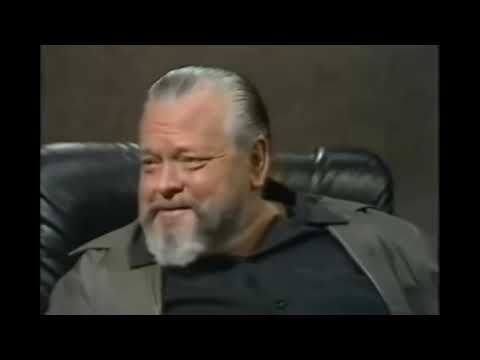
Naturally, this camp is a big one and our relationship can be thought of as analogous to Trotsky and Orson Welles.
What we share though is a conviction that “no formula or computer (given present technology) can replace human decisions” and that order is a web of kept promises:
“Order, for Carlyle, is the set of bonds between the humans in society. A bond is any promise of importance... a society is orderly if it is a society in which promises of significant human value, explicit or implicit, are made and kept.”
From Carlyle, too, comes the reordering of the political compass away from liberty against tyranny and towards order against chaos.
“the fatal error of libertarianism is the confusion of anarchy and freedom. Not only are they not the same thing; they are opposite poles of the political spectrum.”
Freedom is the highest form of order, the last thing built, never the first — it sits atop a “pyramid of needs”: peace, then security, then law, then freedom.
How to read him
It would be insincere to present Yarvin’s work as some scientific examination of the world, in the way even the works of someone like Marx are. If you treat his ideas like serious policy proposals you are insane to not totally oppose Yarvin on moral grounds, in my humble opinion. And if the second Trump admin has been an indication of what Yarvinists look like in power, I’ll pass.
Still I think from a philosophical perspective if you spend too long getting upset and offended at his, sometimes childish, cultural obscenity you are missing the forest for the trees. Yarvin is in the genre of other historical artists like Nietzsche, and his models and proposals should be seen in that light. It would be silly, in my opinion, to abandon Nietzsche’s contributions to human personal or political philosophy because he was a fan of the caste system and wanted to replicate it globally. Similarly I enjoy Yarvin in equal parts because of, as in spite of, his little asides which are somewhere between the ramblings of a madman and a joke.
That means that you are best served not dealing with him on a pedantic discussion of trivia but instead by taking in the full picture of his system, and simply going along for the ride, taking what you like and leaving the rest behind. Nowhere is this more necessary, to me, than as it regards the issue of Yarvin’s monarchism. Because there is a kernel of something really interesting here but his actual positive vision is frankly as serious as any other thought experiment of its kind.
Yarvin the man
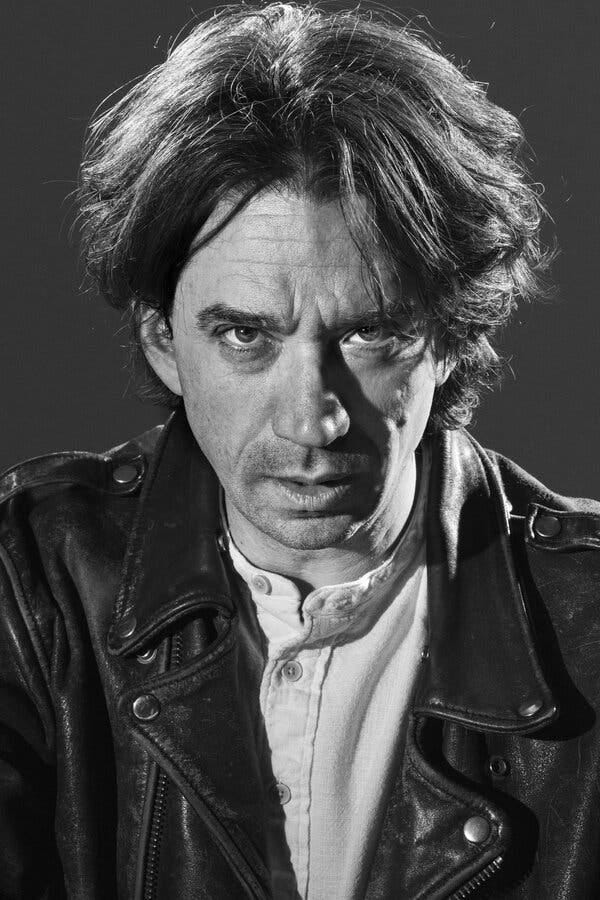
I hope to one day be important enough to have menacing black and white photos by the NYT
Having now surveyed Yarvin’s philosophy, we have enough material to ask what kind of man creates this theory. What type of soul needed these beliefs, and what kind of life did he live?
Curtis Guy Yarvin was born in 1973, the year of the Watergate hearings, into an American order about to reach the cusp of its self confidence.
Yarvin is a Mischling. His paternal grandparents were Jewish Communists from Brooklyn and his maternal grandparents were Protestants from Westchester County with a cottage on Nantucket. His parents met at Brown, where his father, Herbert Yarvin, was studying for a PhD in philosophy; after failing to secure an academic career, he joined the Foreign Service, and Yarvin spent parts of his childhood in Portugal, Cyprus, and the Dominican Republic. Later his mother became a civil servant.
Accounts of his father describe a harsh, intellectually domineering man who could be impossible to please; Yarvin’s own preferred words are “stubborn,” “intense,” and “formidable” — like “a good manager.”
He was an academic prodigy who skipped three grades and entered a public high school in Columbia, Maryland, as a twelve-year-old sophomore — young enough, as he has described it, that you become either an adorable mascot or a weird, threatening alien. At fifteen he enrolled at Johns Hopkins, before transferring to Brown a year later, where he graduated at eighteen. From there he entered a computer science PhD program at Berkeley.
It was during this phase of his life that he became active on Usenet, the decentralized message boards which existed before the modern web. Here Yarvin found a community of engineering students, programmers, and academics which had been screened by the process of using the service. The cost and technical difficulty of getting online had created what he later called a “de facto aristocracy that didn’t know it was an aristocracy.” Then, in 1993, America Online opened Usenet to the general public, and the old culture collapsed almost immediately under the weight of normies.
After a year and a half at Berkeley he dropped out and helped develop an early mobile web browser for a company eventually called Phone.com. When it went public he received a substantial windfall — enough to buy a condo near Haight-Ashbury and leave what he later called the “pat-on-the-head economy” behind. In 2001 he met the playwright Jennifer Kollmer through Craigslist; they married and had two children. Around the same time he began the software project which would become Urbit: an attempt to rebuild personal computing, and ultimately a new digital civilization, from the bottom up. The dot-com money also financed a self-directed education in political theory — Google Books had suddenly made the forgotten nineteenth- and early-twentieth-century library available to anyone willing to go looking, and Yarvin read Mises, Rothbard, Hoppe, Carlyle, and James Burnham alongside the early political blogs.
He has identified in the past the 2004 presidential election as his red-pill moment. Veterans associated with George W. Bush accused John Kerry of lying about his service in Vietnam and Yarvin, who believed the allegations, expected that, once the truth became clear, Kerry would be forced from the race. Instead the press treated the claims as a partisan smear and in effect ran cover for Kerry. What mattered was not whether Kerry was guilty, but that the system’s official truth-producing institutions were now more broadly suspect. What else had he accepted because respectable institutions told him to? McCarthy? The Civil War? Global warming? Democracy?
In 2007 he started Unqualified Reservations under the name Mencius Moldbug — a play on the Confucian philosopher Mencius plus “goldbug.” His first post began: “The other day I was tinkering around in my garage and I decided to build a new ideology.” The readership was never large in an ordinary media sense, but it was an unusual blend of people — programmers, libertarians, rationalists, and alienated members of the American elite — who would grow in power over the coming decades.
In 2013, a TechCrunch article publicly connected Mencius Moldbug to Curtis Yarvin, a forty-year-old programmer in San Francisco. That same year he founded Tlon to develop Urbit and in 2016 he announced that the blog had completed its mission.
By then his writings were beginning to go ~mainstream~ having been read by people as diverse as J. D. Vance and Marc Andreessen. In 2020 he launched Gray Mirror, a Substack published under his own name. In 2021 his wife Jennifer died from a hereditary heart disease. He was then briefly engaged to writer Lydia Laurenson, and together they had a child. Before in 2024 he married Kristine Militello, a former Bernie Sanders supporter who had discovered his work during the pandemic.
Did Yarvin matter?
It is here we arrive at Yarvin’s role in the second Trump administration. Candidly I think that is a story better left for later decades when the dust has more thoroughly settled. But I do think there is one aspect of this story that matters to this article.
If you believe, as many of you doubtless do, that the revolutionary impulse inside the MAGA movement is deeply dangerous — an existential threat to you personally, to our society, to our material well-being, to the global system — then it is worth asking how much responsibility Yarvin, as an individual, bears for the emergence of this faction?
Similarly if you believe that the Cathedral represents something malignant which is better fought than ignored how much credit does he get for identifying it?
Experientially it felt like thinkers like Yarvin, often called the dissident right, burst onto the cultural scene in the aftermath of Covid and BLM. But they truly became a ~cultural force~ after Elon Musk bought Twitter and the foot came off the censorship — which I’d date not to Biden but to the panic that began when Trump first took office in 2017. Suddenly this group had a platform, and access to actively influential people through which they could shape policy.
Who knows if Trump’s return depended on any of it, I would wager in the universe without Musk’s purchase of Twitter he probably still wins the primary and still takes office. But I do think the administration would have been a very different one. A lot of the radical flavor of the first months was driven by people from this space — Elon Musk most famously and most importantly. And to the degree the administration has moderated since, which I’d argue is true, that has in many ways been the result of these same people exiting it.
And the case that Yarvin is uniquely important to their formation isn’t crazy. Still, I don’t think there is a Karl Marx at the bottom of this, because I don’t think there is anyone at the bottom at all.
What there was instead was a very powerful thesis. Progressive liberalism is an all-consuming claim about the universe, one that demands a degree of buy-in from everyone, and — this is worth emphasizing — it presents a basically complete version of reality. If you accept the whole basket of Universalism the world as a moral question is largely solved. A claim that total generates its own criticism almost definitionally. There were ways in which it needed to be challenged; there were ways in which it was simply incorrect. And the moment those criticisms stopped being hidden, they hit with enormous argumentative power.
Perhaps Yarvin was the most important thinker in this space, perhaps not, but either way I feel the time truly called out for a voice and no one can be hoisted with all the responsibility.
Where I agree—and where I don’t
When I began to read Carlyle, and so gained more of a texture for his posterior world, I learned a lot which I simply think is true.
For example, our de jure description of power frequently bears very little relationship to its de facto distribution — post-Augustus Rome, where the two had also diverged, is a well-chosen analog — and this dishonesty produces institutions where almost everyone can obstruct action but seemingly no one can be held responsible for the result. I think Yarvin is basically right that much of what we experience as political dysfunction comes from this divergence.
I also think the Cathedral is a useful description of a real social phenomenon. Institutions select people who resemble the individuals already inside them; those people respond to similar incentives, recognize the same authorities, and gradually arrive at a shared moral language without anyone needing to distribute orders. Yarvin was also right to notice that the resulting consensus was far narrower than its participants imagined, and that certain factual questions — HNU being the most obvious example — were transformed into moral tests rather than empirical ones. Where a belief becomes sacred, disagreement becomes blasphemy, irrespective of whether anyone continues to use religious language.
Finally, the identification of Universalism as an adaptation of Anglo-Protestantism which is better able to get around our prohibitions on the separation of church and state is apt and worth thinking about seriously.
Where I part company with Yarvin though is in his attempt to transform these observations into a complete theory of modern history. I do not believe that an immortal strain of Puritanism mutated through Unitarianism into Progressivism and then captured the planet by optimizing every institution for its own expansion. Very little of what Yarvin observes actually depends on Universalism being some straight line descendant of the Puritans, and many other aspects of that religion have fallen, relatively, by the wayside. Where are the progressives marching in favor of predestination for example?
Centrally, the Cathedral can explain how a consensus reproduces itself once it has entered the institutions. But it cannot explain why this particular consensus felt so obviously true to millions of normal people in the first place. For example, there are many state power expanding beliefs which the Cathedral rejects because they are unpopular, or believed to be dangerous. Even for HNU it is quite plausible that the early 20th century model which called for overt eugenics is more favorable to power leakage than the one we got. No, democracy can shift its voters but it doesn’t make them from nothing.
Nor do I think formalizing power makes politics disappear. Even within companies CEOs are often removed by hostile takeovers or shareholder revolutions. I am perfectly willing to believe that a powerful executive can sometimes govern better than an elected committee, that order is prior to freedom, and that many of our rituals of popular sovereignty are theater. But Yarvin’s leap from these fairly obvious observations to Patchwork, corporate sovereignty, and the cancellation of the Constitution is, in my opinion frankly, silly and immature.
My own answer to the question of why post war liberalism won so absolutely is what I call the “Boomer Truth Regime”. There was a set of beliefs that existed in American society when I was growing up in the early 2000s, and these beliefs were not political in the sense that they weren’t really debated by either side. They acted as the background ideological radiation — the framework out of which everybody operated. And there is nothing unusual about that on its own; there have been truth regimes before. Under Tsarist Russia there was a Tsarist truth regime and under the Soviet Union, a Soviet truth regime. Almost by construction, almost by definition, you need elite institutions to have some kind of shared, truthful fact set.
And I call ours the Boomer Truth Regime because of its association with the boom time after World War II, as well as the generation born during it. You can take the 20th century for America as one huge emotional and moral arc. What that arc created was a feeling for Americans of an almost inevitable, rapid upward salvation — a sense of conquering badness that has basically no parallel in the human experience.
Peter Thiel, in Zero to One, calls this indefinite optimism: the idea that society is just going to keep getting better without you having to really put much work or thought into it. And it was really true; society did just get better. From inside that experience it was not insane to conclude that history had a direction, or that the various pieces of this transformation belonged together. The mistake came later, when a historically contingent run of victories was elevated into a permanent law of moral progress.
Liberalism won both WW2 and the Cold War for a reason, but much of the specific flavor of our era is historically contingent. It is for this reason I do not share Yarvin’s belief that Cthulhu only swims left, or that the Structure must go on accumulating contradictions until it finally collapses and surrenders to some waiting sovereign. What I see around me is not an immortal Cathedral marching serenely towards infinity, but an aging truth regime losing its authority.
Take the HNU stuff as a good example. The social stigma around Human differences and genetics was once exhausting, but anecdotally it is fading quickly. There is still a core of neurotic people who freak out, but they are just one group among many, and I feel comfortable talking about it, as do people like Bryan Caplan, without it jeopardizing our livelihoods.
The Cathedral of course wanted it to be true, for the reasons Yarvin identifies, but it seems increasingly likely the question isn’t “if” Human populations differ genetically, as much as “to what degree” and “how responsive to policy it is?” Global decision actors are more and more acting on the scientific ambiguity, even if it is still off limits to admit.
The decline
The Boomer Truth Regime is not the only thing that is aging. There is one more thing I have to talk about, because any article on Yarvin that doesn’t at least touch it is being disingenuous at best and purposefully deceitful at worst: the problem of his intellectual decline.
When you read his most recent stuff, there is a degree of amateurishness to it. The older work felt more thoughtful and more serious. If you talk about Yarvin online often people will ask “which” Yarvin you are talking about and it is an extremely fair question.
But I don’t think this is unique to Yarvin at all — it appears to be one of the most common fates of the Human condition. Looking at society retroactively, people seem to peak — professionally, cognitively, however you want to frame it — in their early forties. Of course everyone is different. But on average there seems to be an accumulation of knowledge about the way the world works that you undergo in your twenties. Then there is an actualization process in your thirties, where you test that knowledge against reality. And then — to continue abusing Hegel’s trinity there is a synthesis that appears to occur in your early forties, a combination of the idealism of youth with the practicality of adulthood. The research on creative careers backs my folk observation. Benjamin Jones and Bruce Weinberg’s study of Nobel laureates puts the mean age of prize-winning work between 37 and 40, climbing toward the late forties by the century’s end.
What seems to happen is that people slowly lose some of the ability to integrate new ideas, and the lessons they learned in life freeze into perpetual truthisms. Marx splits philosophically into the humanist Marx of the early, more philosophical era — who is actually fascinating — and the harder-edged Capital Marx of the systems and the tendency-of-the-rate-of-profit-to-decline, who is much less interesting, much more boring, much less insightful.
I want to be careful with the framing here, because calling this tragic invites people to get defensive, and there are versions of this maturation that are very positive. The American academic system, whatever else I’ve said about it in this article, is actually well designed for it: a new batch of thinkers comes in, and the people aging into their fifties and sixties and seventies take on different roles at different stages of life. Someone in their fifties is completely capable of brilliant ideas while someone in their eighties probably isn’t, but they can tell you what they have seen work and what they have seen fail, which is invaluable.
The problem is not aging but our strange insistence — human neurological uniformity applied to the self — that a person should be the same thing across their entire lifespan. People have phases and there is a natural cycle to things.
Yarvin, I think, shows one of the great benefits of the internet philosopher: a completely fresh set of eyes, free to look at the world as he actually found it and to walk back into the forgotten nineteenth-century library to see what Carlyle and the rest had to say about our problems. But he also shows the tragedy of the lone internet philosopher. In a better world, the Yarvin of the 2020s would have been training a whole generation of people in this way of thinking — sending them out to search for capital-T truth and test his theories against reality. Instead, he was, by all appearances, loafing around his home in San Francisco and writing increasingly low-quality articles.
This decline, in other words, is less symbolic of anything particularly unique about Curtis Yarvin than representative of a basic flavor of thinker. And we are reaching the point where the Gen X thinkers who were first to question the Boomer Truth Regime are aging into their maturity, right as the regime itself cracks up.
Peter and Yarvin, Yarvin and Peter
And now my personal relationship with Yarvin.

Honestly, I don’t know the first time I saw his name. It was probably back in 2021, when Scott Alexander got doxxed by the NYT. But I’m not sure. What I can say is that I was first genuinely exposed to him in the summer of 2023, through a YouTube channel called “Parker Banks”(silly how similar our names are) which uploaded full audiobook versions of Yarvin’s writings for free using an AI narrator.
I can remember listening to “A Gentle Introduction to Unqualified Reservations” in that late California summer, on my bike rides back and forth from the office — at the time I’d been sequestered in a random sub-building, due to construction, which I called “The Gulag.” For the next year or two I kept up with his uploads religiously and read Yarvin’s pieces on my iPad during PhD seminars.
In short, Yarvin arrived to me like a strike of lightning, and to pretend otherwise would be fundamentally insincere. What he was identifying about reality, on a core experiential level, felt right. Progressivism seemed to be in complete control of society; the state tolerated disorder; certain hard realities had become unsayable. Power was held not by elected officials — who were themselves brought into power through a process I had almost no effect on — but by some unappointed and unaccountable blob which would twist itself in every possible manner to justify anything that was progressive, or anti-Trump.
Many of Yarvin’s criticisms of society appear in other books. Carl Degler’s Pulitzer-winning Stanford historian also argues that America accepted HNU for ideological, not scientific, reasons In Search of Human Nature. What differentiates Yarvin is that Degler is himself a progressive, at least in the sense Yarvin means it. His book is an attempt to rescue progressivism from one inconvenient, poorly validated belief — which, however noble, means it holds its punches. Yarvin does not hold punches. He examines the system I existed inside of from a critical, not a defensive, position. I had never seen anything like that before.
I can candidly say that of every 21st-century writer I’ve read, Yarvin is the most interesting, the most original, and the most capable of seeing the problems that plagued my slice of society. There are countless people like myself now writing about these problems, using words like “the red pill” or “the Cathedral” to describe modernity, and we all owe something to him. Because the era he was writing in was simply a different one. Today none of my friends would care about a NYT hit piece revealing that I have a resentful ex, or made jokes I shouldn’t have, let alone that I question the scientific validity of HNU. But I remember the 2010s. Shit was just different.
There was a discrete box in Anglo middle-class society around what you were, and were not, allowed to notice. A near-religious claim of human equality was hammered into us at every turn, by every authority, and there was no one — literally no one — arguing the alternative case. I recently came across a graphic showing the share of people identifying as transgender and non-binary by birth year: it peaks, then begins falling rapidly, right around my cohort of Americans (I was born in 1997).
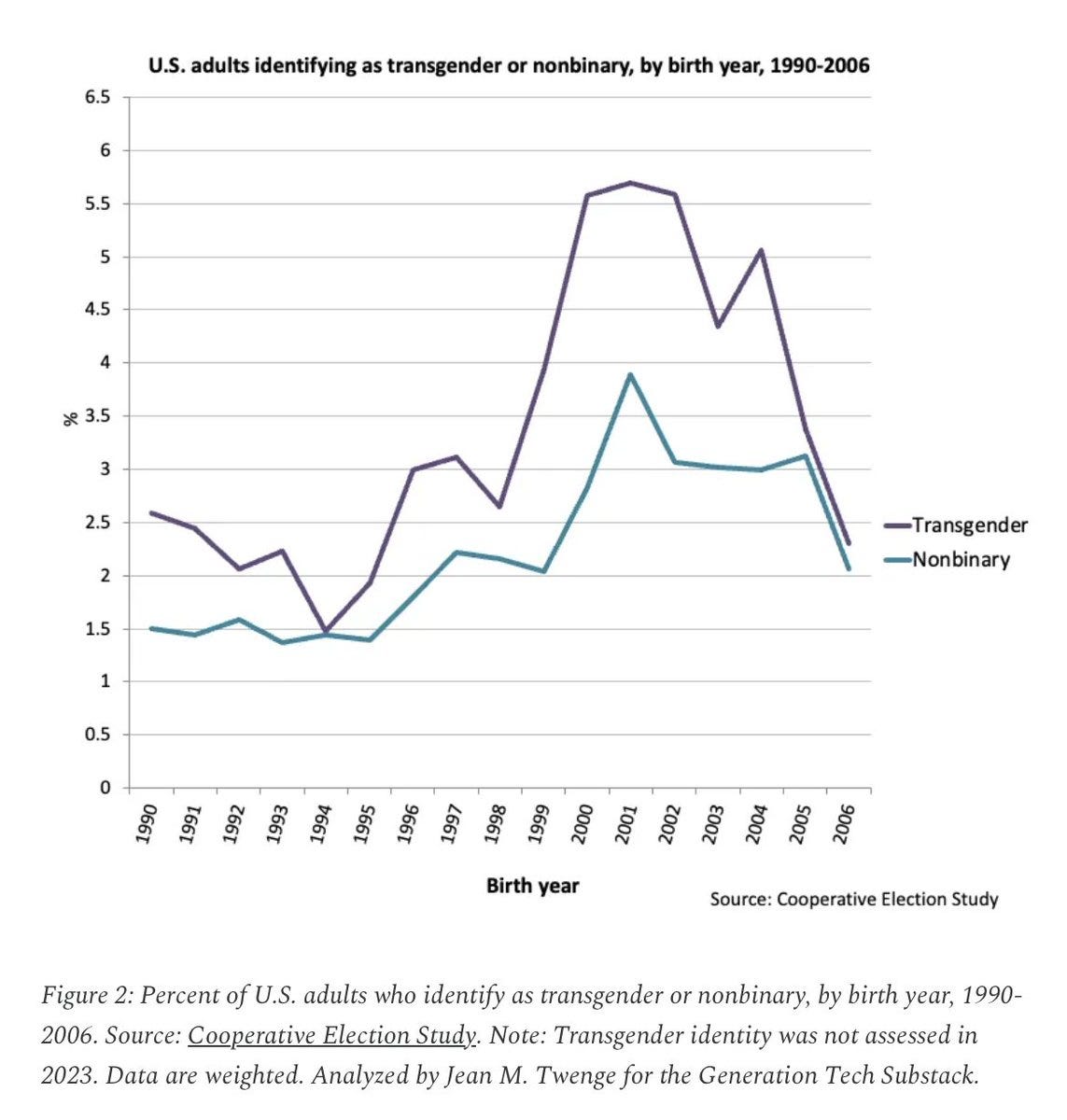
Every generation lives through its own strangeness, but ours was strange in a particular way. And in the early 2020s I was searching anywhere for someone, anyone, who could explain what had happened. As a kid in the 2000s it felt as if the future had been “solved” for me — not Star Trek exactly, but the 1990s forever. Instead, as I grew up, the world was thrown open, and out of every hidden door and closet rushed the sleeping demons of resentment.
You can say that my early childhood was one of sheltered privilege, and I would hardly dispute that. But privilege is a good thing, and so losing it was deeply painful. Slowly at first, and then with increasing speed, I felt the world that I lived in be thrown over and replaced. And at each turn the side that was armed with “facts and logic” was battered down and drowned out by the ocean of new normie arrivals.
An example of this happened in real time with the community “Wall Street Bets.” When I was first introduced to the community in the 2010s, it was a place for people who worked in finance, or aspired to, to chat about complex and interesting ideas. Then gradually, as it became more famous during Covid, it was overrun with a legion of sloppers who totally destroyed the previous community — which I felt at home in — and replaced it with a mindless field of garbage. It was Yarvin’s Usenet collapse replayed a generation later — though I wouldn’t hear his version for years.
The same thing felt like it was happening to everything I loved. My games were being taken over and destroyed; my movies and TV shows were canceled, and in their place came a long line of what I felt was trash.
Then, in 2016, Trump was elected.
At the time I was a volunteer in AmeriCorps — a program like the Peace Corps, but in the US — working on environmental restoration. I remember the night extremely well. In the lead-up I’d faced genuine uncertainty about who I wanted to vote for; naturally I didn’t think Trump had any chance of winning — although a part of me secretly hoped he would — but I decided to do “the right” thing and vote for Clinton. (I filled out my mail-in ballot incorrectly, so it wasn’t counted anyway.) That night a group of us sat in the living room watching the CNN results come in. Pretty early on it was clear Trump was overperforming, and the room, which needless to say was very liberal, fell into shocked silence.
Around midnight my girlfriend — a Jewish anarchist who ended up going to Harvard — and I went for a walk. She was wrapped in a blanket as we strolled down the Utah streets toward “the canyon,” where people would go to drink and smoke. Her sister had worked on the Clinton campaign, and she was in a state of profound shock. I remember saying that this election was a wake-up call about disregarding the needs of white men, and the look she gave me could have melted steel beams.
It was indicative of the experience the next decade or so would bring. Again and again I felt like “my side,” young white men, was being extremely reasonable in our objections, and again and again we were shouted down by people who simply took it as prima facie true that we were the enemy. Most people, of course, didn’t care — including the vast, vast majority of white guys — and so would just pipe down. What made it all the more confusing was that I wasn’t even sure why they were wrong. When people said things like “the future is female,” it felt like an attack on me, and I sincerely believe that to many people it was meant as one — but how could I really dispute the basic truth of it? From my perspective, the future very much did “seem” female. When MeToo arrived in 2018, it felt as if the future of gender dynamics had been forever sealed. Women had simply “won,” and I would spend the rest of my life navigating within their box. Of course this didn’t happen — but I want to be clear: as a 20-year-old, it felt like it had.
But that was incompatible with my basic urge for self-preservation. I couldn’t accept a system which doomed me to gradually sliding down the social ladder simply out of logical word games. I could see that within living memory there had been a radically different world, with totally different sexual expectations and distributions of power. Just out of reach above me, a world seemed to exist where I, as an Anglo man, would have had access to immense privileges — but it was ~gone~ as if the door had just closed on me and left me standing in the cold.
It is extremely common for people to talk about the old “boys’ clubs,” and this is anecdotally 100% true. But there are no young boys’ clubs, and that contrast was impossible for me to miss. Something had changed, to my detriment, silently and without open discussion, between my birth and my entrance into adulthood.
So why? Why had this happened, and who had agreed to it? The uncomfortable realization was that I had — or if not supported it exactly (my instincts have always been too hierarchical to be truly left), then accepted it as some inevitable march of history. So inevitable that I felt nothing but disgust towards the people who “tried” to resist it. And perhaps worse: what was I even fighting for? On paper, what I wanted was to be treated as an equal — but an equal to whom? And an equal defined how? This is what was really eating away at the inside of my brain: my “enemies” and I were in agreement on the basic goal, had radically different perspectives on everything, and it felt like my enemy literally didn’t care about evidence.
Anything contrary to the preferred direction of policy — towards more power for groups traditionally denied it, more diversity, more statism — was shut down, vilified, and its authors forced through humiliation rituals by online crowds hungry for the destruction of these helpless people.
And the best answer I could find was in the works of Curtis Yarvin.
Now, in retrospect, I think the particular problems of that era felt so real to me for the same reason anything someone actually experiences does, and they were less some comment on the Human species than another random chapter in our weird, rambling history. I’m sure that, to the characters involved in the 2001 Bulgarian election of the WW2-era deposed king, and the subsequent scandal and collapse of the monarchist movement, it felt important — but to everyone else it was just another random Wikipedia entry. Similarly, I lived in a time of shifting power and uncertainty — in fact, I believe I still do — and so that meant things were in flux, and the changes were as painful to me as they were pleasurable to others.
I’m not sure how to end an article like this. I don’t read much Yarvin anymore, and the ideas of his which most influenced me are now seen by many of my contemporaries as obviously true, trivial, points. But he is not the clown many of his opponents see, and even if he made a poor voice for the powerful, he was still a deeply insightful thinker.