Wtf is going on with the market rn.
Your dashboard should be lighting up right now like a Christmas tree
Summary: The essay examines why major recent market shocks—including federal spending policy reversals and DeepSeek's AI release—have failed to produce significant stock price movements. The author presents two explanations: either sophisticated capital markets have already priced in all available information through the concentrated analytical talent in finance, or markets are operating outside normal valuation frameworks, driven by uncertainty and "vibes" rather than fundamental cash flow analysis. The author ultimately expresses skepticism that either explanation fully accounts for the observed market stasis amid transformational changes.
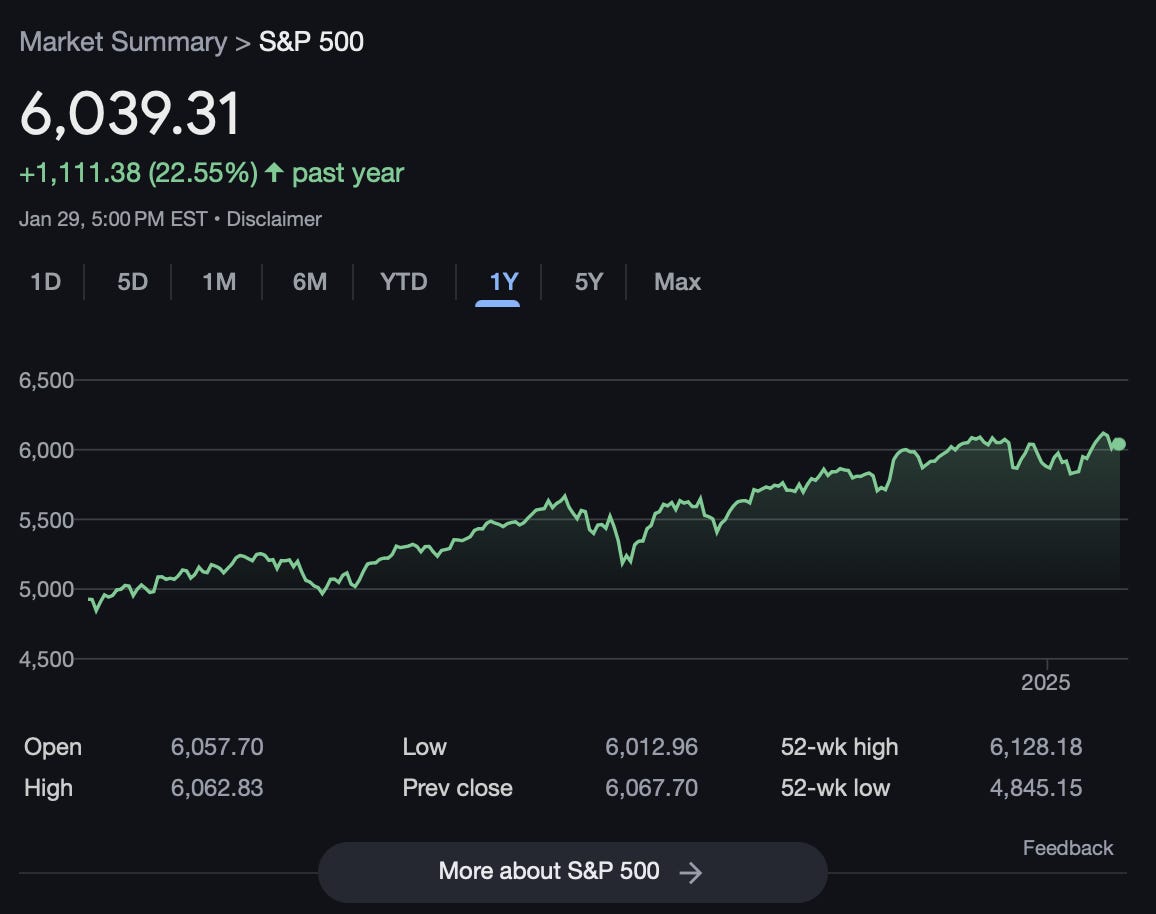
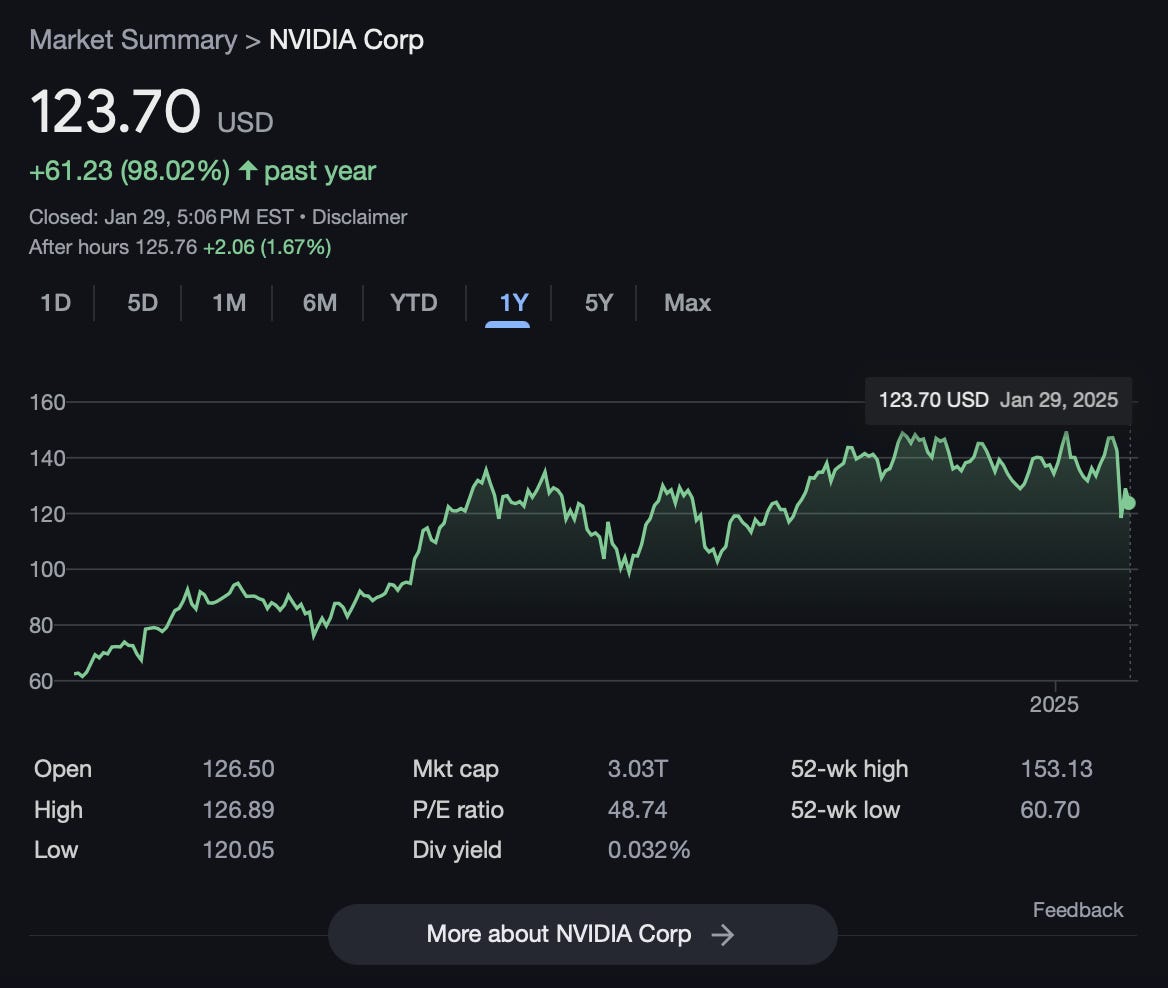
Something very strange seems to be happening with the market right now. Despite huge shakeups in the last eight days—including both the turning off and turning back on again of the $3T in federal spending and the release of the new Chinese AI model DeepSeek—there seems to be a near-total absence of market response(in either direction).
When looking at this index of America’s largest companies, where does it look like the big shock to beliefs happened over the last year?
"Can you point me to the place where it hurts NVIDIA?"
In a normal "Newtonian1" model, asset prices are a function of two things: the mean and variance of discounted cash flows. A signal that alters these beliefs should, in theory, move prices unless one of two things is true: (1) the signal contained no new information or (2) the signal was not seen as credible by the market. In other words, prices should always move unless the signal was already "priced in."
This leaves us with only two possible worlds. Either everything we have seen in the last eight days has contained no new information about the expected level or risk2 of future cash flows, or we are outside the bounds of standard Homoeconomicus capital markets. That isn’t to say this world hasn’t been charted, but your dashboard should be lighting up right now like a Christmas tree.
For $10/month I write weekly articles. You can subscribe for free to receive a preview of the paywalled articles. If you cannot afford the $10/month and would like to read my stuff anyway, DM me.
Everything Is Priced
I’ve taken enough financial economics classes to have something like an axiomatic respect for markets’ ability to price information. In retrospect, I could have just believed whatever outcome Polymarket predicted in almost any political standoff and walked away better informed than I would have been after thousands of breathless words of political analysis. But if it is true that capital markets in this country really did fully price in the changes to AI and Trump’s avalanche of policy shifts, that is remarkable. Notice I didn’t say impossible.
It really is hard for people to comprehend how much finance has vacuumed up the most analytically talented humans in the world over the last decade or so. For example, the very man behind DeepSeek, Liang Wenfeng, worked as a quant trader before deciding to dunk on the entire AI world as a side hobby. Take another example: Zhou Qun Song, a Chinese-Canadian who won five gold medals at the International Mathematical Olympiad only to go work as a quant trader at Citadel and is now a math PhD. The truth is that there is so much money to be made from even squeezing a small alpha from the market; people are willing to do anything to win. On paper, if you can find a big enough arbitrage opportunity, you can create unimaginable wealth. And unlike in other fields, where making this money requires actual labor and time, in finance, you can make—and lose—a functionally unlimited amount, all at once, all from your computer. In other words, quant trading firms scoured the world like Nazgûl, hunting autists with real talent as if they were the One Ring.
Returning to the example of Polymarket. It looks like only ~$3 billion exchanged hands during the recent presidential election, but even this "small" amount of money still resulted in a perfect state-by-state prediction. Just think about how much more time, money, and, frankly, clear-minded rationality is poured into trying to figure out what Trump is going to do by the financial world in New York.
One of the strange things about being a person is that you find out that most questions have an entire sub-epistemology of people and thinkers who have pondered very deeply about this problem. And that the main determinant for how well they are able to predictively model reality is who they are. This is uncomfortable to admit, but on some level we know at least part of the reason literature departments aren’t analytically rigorous is because they are not analytical people. We have much better predictions for something like physics than we do for literature, in no small part because the people with the highest analytic ability are physicists and not professors of comparative literature.
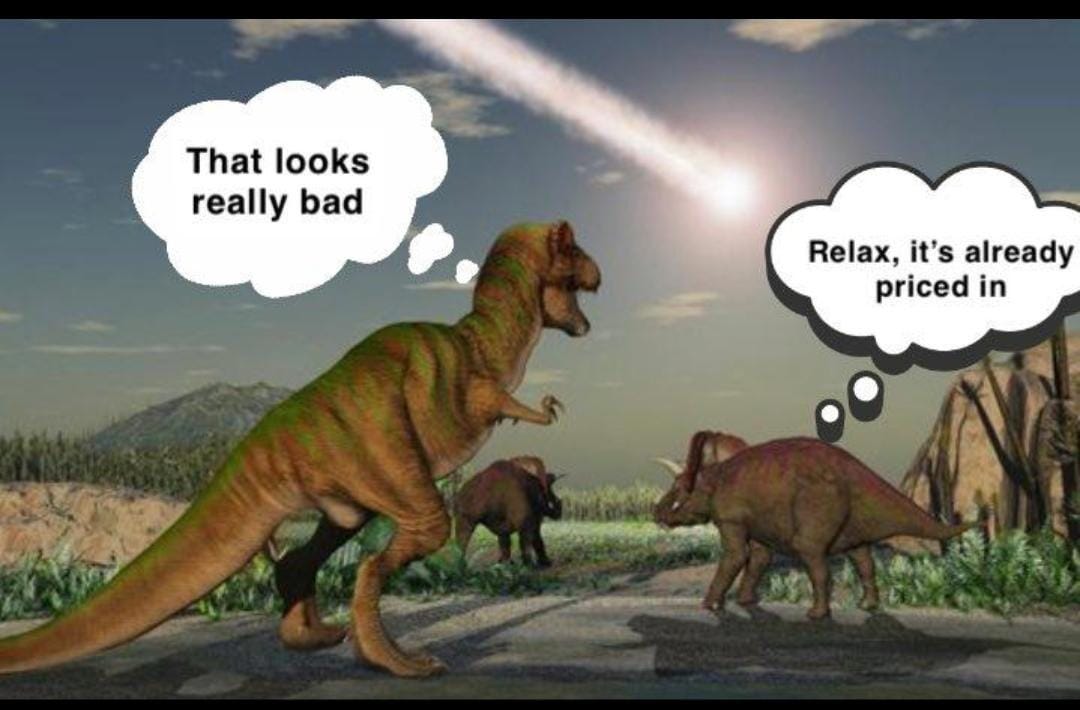
What all of this yapping is meant to convey is that I think it is possible that the market had already priced all of this. You knew Trump would cut regulations and generally act like a bull loose in a china shop, and the exact things he broke wouldn’t really matter all that much. You knew we were on an exponential growth curve with AI and that a lot of these frontier models could be made more lightweight, but you didn’t know exactly how.
All of this would mean that the exact realization hasn’t actually meant that much and we are still on the same cash flow path we were always on. In which case, I personally embrace my "new" financial overlords and would like to express my undying gratitude for efficient capital markets.
Scenario Two: ?

As I mentioned in the introduction, if things aren’t "priced" and we still aren’t seeing market movements from frankly transformational changes, I’m at a loss for words. In the previous section, I went on at great length about how brilliant these financiers are, but in reality, shocks happen all the time. Heck, I was recently reading a paper that used the signing of a bill—which had already passed—as an exogenous shock to investors’ information. So why something like that would be surprising but what we have seen so far isn’t is a mystery to me.
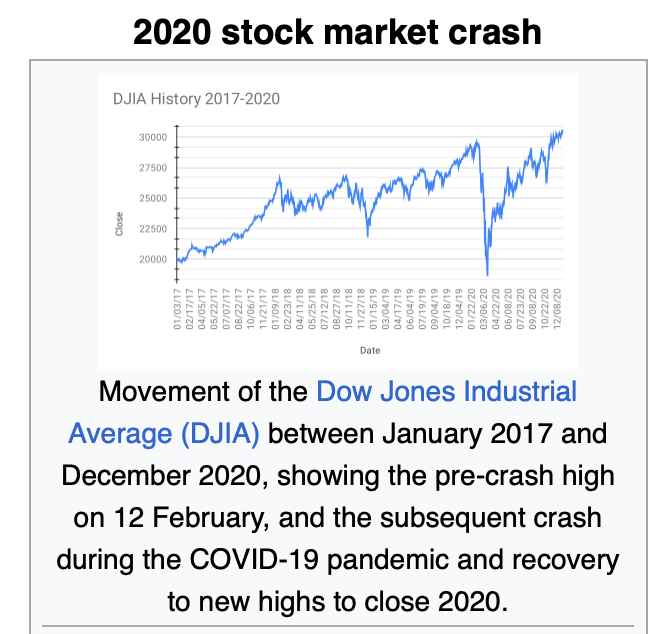
As an extreme example of the obvious failure of finance to correctly price a large and, in retrospect, obvious shock, just look at price movements around the COVID pandemic.
What feels more plausible is that we are in a very strange and uncertain time where the market is dominated more by vibes than anything else. As a society, we are having to seriously talk about p(Doom), and the estimates we are getting aren’t zero. How a market is supposed to operate in the world we live in right now is honestly a total mystery to me, and perhaps to everyone else also.
Going back to the bull in the china shop example. We have some idea that things are going to radically change. We don’t have any idea what specifically will radically change. Nothing we are seeing yet is really updating that. So even if there is material information, it isn’t touching the general vibe that “nothing ever happens” and “holy shit stuff is happening.” So just like the rest of society, the capital markets are just plodding along like nothing new has happened.
Right before finishing up this article, I came from a meeting for a lab that researches corporate taxes at Stanford (STAX). We were all just sitting there talking about corporate incentives, etc., and no one even mentioned the Trump administration. In fact, one of the people talked at what felt like great length about the increasing coordination between Europe and America along tax compliance and how that would impact firms moving forward. I couldn’t help but feel a little like this meme.

But the truth is I said nothing because even I am not sure. It is vibes all the way down.
Newtonian in the sense that it has a number of simplifying assumptions about the way that the system works but they hold in most normal settings.
Note: this includes the resolution of prior uncertainty.