The Office: A Love Letter
Reviewing my all-time favorite show.
Summary: Peter Banks presents a comprehensive love letter to NBC's The Office, rating it as his all-time favorite television show and arguing that it represents an unparalleled success in capturing the documentary-style, intimate portrait of everyday American life that James Joyce achieved with Ulysses. The essay identifies the show's genuine affection for working-class culture and its ability to maintain realistic stakes as its greatest strengths, while acknowledging significant quality decline in later seasons and a struggle to address post-Great Recession technological and social changes. Banks emphasizes that despite these flaws, the show serves as a invaluable time capsule of early 2000s office aesthetics and corporate America.
What I had originally intended to be a shortish review has blossomed into about 8,000 words, making it far too long for a single essay. As a result, I’ve decided to break it into three parts. Today will be an overall review of the show as well as some yapping about it. Wednesday will be the first part of my ranking of each of the characters in the show, specifically tiers F–B, and then next Saturday I will release tiers A–S. Cheers!
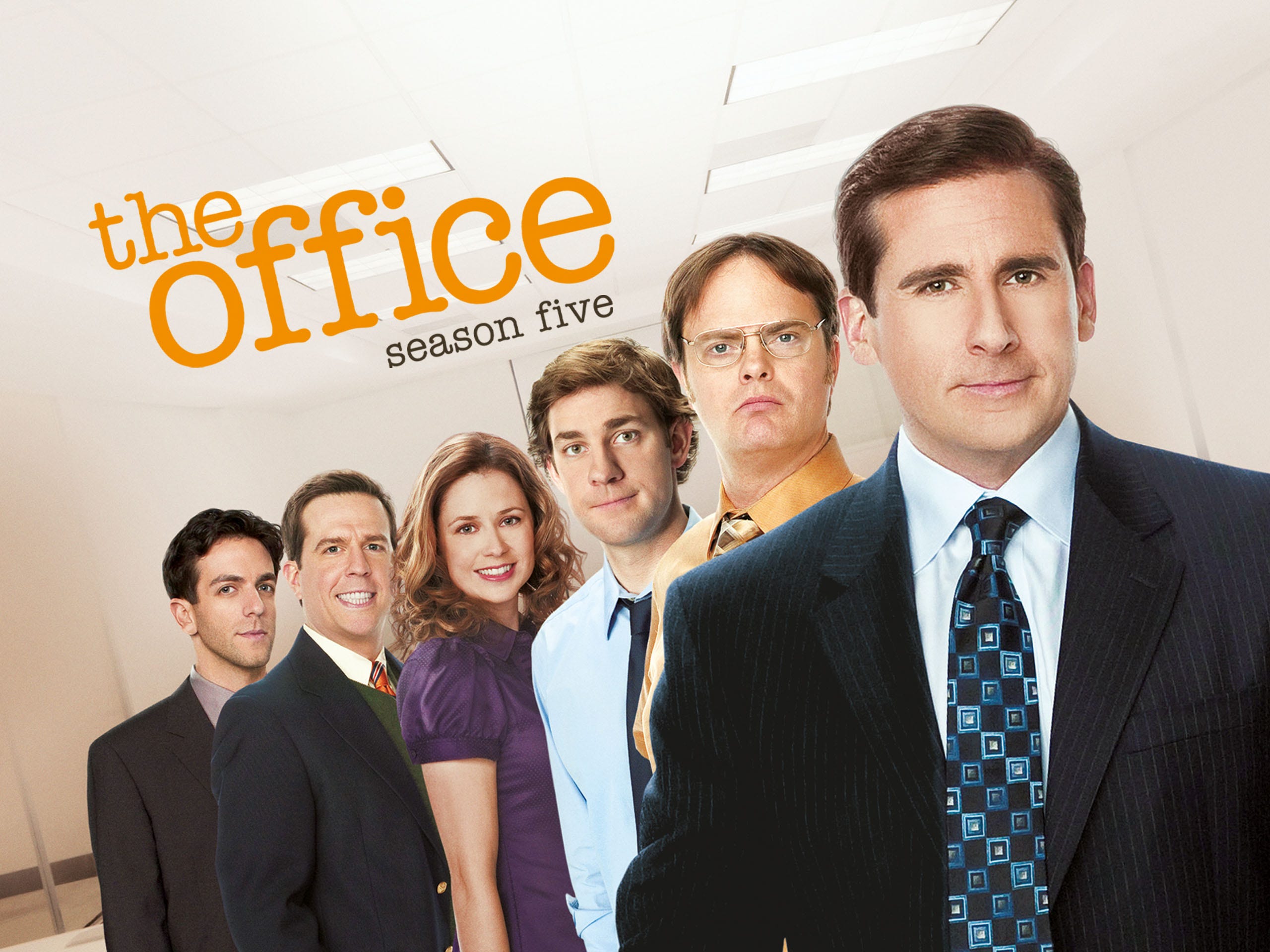
Score: S+
There is simply no show that I’ve spent more time watching than NBC’s The Office. It, along with two other shows—Community and It’s Always Sunny in Philadelphia—comprise at least 50% of the total time I’ve spent watching TV1 . In fact, I basically don’t watch new TV shows because I love my classics so much—although sometimes I will discover a gem and devour it like I did with the first season of The Boys.
However, among this trilogy The Office, truly, stands alone as my all-time favorite TV show.
Why? Well, for a couple of reasons. First, it is just genuinely really funny and awesome. The characters are well written and interesting, and all the actors do an incredible job with outstanding chemistry. Second, it happened to land—similarly to Skyrim—at that perfect time in my life to have maximum emotional impact. But third, and to me most important, the show managed to capture the Plebeian American culture of my late childhood so accurately it will forever act as a time capsule to my youth.
James Joyce once famously said, in regards to his magnum opus Ulysses:
I want to give a picture of Dublin so complete that if the city one day suddenly disappeared from the earth it could be reconstructed out of my book.
Ironically enough, I think The Office, in particular its first 4 seasons, is the purest success of this dream ever yet realized.

The premise of the show is that a PBS-like film crew is making a documentary about middle-middle America, and they have chosen to record the lives of the employees of Dunder Mifflin, a midsized paper company in Scranton, Pennsylvania. By using this setup, the writers are able to include reality-TV-style cutaways where the characters will comment on the events in the middle of an episode and we can effectively get inside their minds—something essential in a show whose action, if we can even call it that, is totally built around interpersonal dynamics. Although, aside from the frequent use of character commentary, the existence of the cameras is mostly ignored by the in-universe inhabitants—even in times such as late-night personal dinner parties or private vacations, where it would make no sense.
Part of the reason they can mostly ignore the cameras is that almost the entire show takes place within the walls of the office from which the show takes its name. Chatty gave me an estimate of 75% of total screen time taking place inside the main building, and anecdotally, that feels, if anything, a little low. This focus gives you, as a viewer, the ability to spend an enormous amount of time in the space—particularly the area between Jim, Pam, and Michael’s desks—so over its 9 seasons and 201 episodes, you develop an intimate familiarity with the layout of the desks and the full network of relationships.
But what do these episodes actually contain? Well, I would say the modal episode pairs an A-plot—Michael Scott caught up in some absurdity—with a B-plot that follows Jim, or sometimes Dwight on a side quest. Often capped by an elaborate prank or general hijinks. Each show begins with a cold-open vignette before the credits; many of the series’ signature moments spring from these snippets. Sometimes the cold open teases the main story, but just as often it stands alone as a mini-episode inside the episode.
I will have much, much more to say about why I love the characters so much later, but suffice it to say here that the primary trilogy I just mentioned all have incredible chemistry and at least communicate to the audience a genuine friendship2. But it isn’t just constrained to that core cast—all of the side characters are fun in their own way, and most of them have satisfying emotional arcs over the course of the show.
Because that is what it is really about at the end of the day. The Office is a story about the plebeian citizens who work there, and it celebrates their lives as meaningful on their own terms. As a plebeian myself, I love this.
The affection that the show clearly has for working-class American life contrasts it with more artsy shows like Severance, which takes the same aesthetic but tries to instead inspire dread, or movies like Office Space and Fight Club, which focus mostly on the stifling nature of contemporaneous life. This celebration is truly its greatest strength.
Unlike its obvious “rival” Parks and Rec, which feels almost insecure about the “triviality” of its subject matter and so sends its characters careening towards fame and wealth, The Office is able to keep the stakes, mostly, reasonable. Take, for example, Leslie, the lead of Parks and Rec, who is elected President of the US, and compare her arc to Dwight, who ends the show finally achieving his dream of being manager, or Michael, who has retired to Colorado and had a family. Part of the reason the show is able to maintain this—dare I say it—realism is because actual office life, with its near-identical repetitions, is well suited for 20-minute episodes with self-contained adventures. But another part of it is a lack of licentiousness3 on the part of the creators of the show. It would have been so easy to have a character murdered or something equally insane, but for a show of this type to be any good, the writers have to resist the siren song of escalation. If they do not, eventually the show suffers from setting collapse. We are seeing this right now with Marvel, where the stakes really can’t increase anymore without fundamentally undermining the coherency of the franchise.
Now, the fact that the creators celebrate Plebeian American life is not the same thing as saying the show lacks any criticisms of that same culture. Like all media from its era, it has an obvious progressive-liberal bent, but this perspective—which was the telos of the era—is never particularly overbearing. Instead, most of the shows targets of lampoonery are the apolitical foibles of life, such as, for example, the pointlessness of modern corporate hierarchies, hammered home by multiple stretches without a manager wherein the office functions better than ever. So even in its criticism, the show isn’t about “big” questions like how society should be organized, but instead takes our culture as given to comment on its true nature, which is overwhelmingly beautiful, warts and all.
There are two areas that I think the show struggles to keep its pulse on society. The first is just that the show seriously declined in quality over the course of its run. It is far from a Game of Thrones–level disaster, but I would say the general consensus is that the best parts of the show are in the first couple of seasons, with a gradual decline in quality until Michael leaves, followed by a rapid deterioration. Season 9 in particular is difficult to watch.
![The Office Ratings and Viewership [OC] : r/dataisbeautiful](https://substackcdn.com/image/fetch/$s_!NuBA!,f_auto,q_auto:good,fl_progressive:steep/https%3A%2F%2Fsubstack-post-media.s3.amazonaws.com%2Fpublic%2Fimages%2Fe9662bec-db73-4c0e-96ed-910535371f98_1325x581.jpeg)
As I’ve already blathered about at great length, what made the show so great was that it held a mirror up to society. Later seasons instead simply became a reflection of themselves. All the characters gradually morphed into more and more stylized caricatures; Kevin, for example, ceases to be even remotely believable as an actual person by the end.
And second, it also struggled to keep up with the rapidly changing post–Great Recession culture, to the point that the final couple of seasons almost feel like time warps back to Bush-era America. This makes sense since a lot of this change wasn’t, let’s say, “easy,” and so the writers struggled to integrate it into the generally feel-good atmosphere.
A somewhat silly example of what I’m talking about is the existence of a secretary throughout the entire run. Anecdotally at least, it seems like around the late 2000s, human receptionists were largely replaced by robotic answering machines as your first line of contact at any business—if you know your party's extension please enter it now. They don’t totally ignore this change, and in Season 5 a sales rep comes in to try and sell one of these systems, but Jim manages to keep him at bay and so saves Pam’s job. Basically, in real life Pam would have just been fired, like what happened to millions of office workers during that period. A perhaps more glaring example, though, is the lack of online digitization. While Ryan is serving as the “boss” character in Season 4, there is a plotline involving the creation of a website, but again it fizzles out. In short, the show fails to confront many of the more difficult and complex social changes our society underwent during its period (2005–2013), noticeably totally sidestepping political polarization. It's hard to see this as totally a negative thing though.
I really want to emphasize though that the show is incredible, and if you have any fond memories of the early 2000s, you will enjoy it thoroughly. I feel like I’m missing out on so much that I loved about it but I will go over everything in more detail in the character rankings.
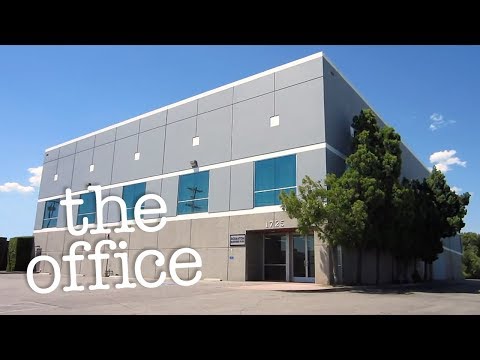
Before I wrap this essay up, I want to just give kudos to the set designers, because they managed to perfectly capture the aesthetics and corporate America in the late Bush–early Obama years.

There was an exhibit that came through Chicago while I was living there that let you physically explore a recreated set, but unfortunately I missed the opportunity. I hope they bring it back, because getting to see things like corded phones or that style of wall, in a pristine and not degraded condition, would be incredible.
Keep your eyes posted for the next part where I will rank all of the characters in the show!
Insane I know, but true
I have no interest in looking into if this perception is true
Every time I read an old book I like to adopt a new word into my vocabulary. From Carlyle it was veracity, from Gibbon it is licentiousness and I feel the need to use it