Moving on from Stanford
The jig is up!
Summary: Peter Banks examines his departure from Stanford's accounting PhD program to critique academia's fundamental dysfunction. He argues that universities conflate research and education—two goals with incompatible incentives—while funding both primarily through student debt obligations. Banks contends the academic discipline of accounting has become detached from industry practice and dominated by economists with no accounting background, and that meaningful reform requires radical structural change rather than incremental improvement.
In one of my recent articles about my drive across the country, I teased that it was part of a larger shake-up in my life. Today I wanted to talk about that change a little bit.
To make a long story short, I’ve left my PhD program at Stanford’s Graduate School of Business with a terminal Master’s, often referred to as All But Dissertation (or ABD). This means for the first time in my life, I am completely out of the educational system and subject to the whims and rigors of the market!

Since I have a symmetrical parasocial relationship with many of you, and frankly I haven’t been coy about using my status as a student here to lend myself credibility, it feels important to let y’all know I’ve left. The jig is up!
I’m currently on the Virginia side of the DC area. If you are within a day’s drive, hit me up and we can grab lunch. I’ve had a universally positive experience thus far meeting up with people!
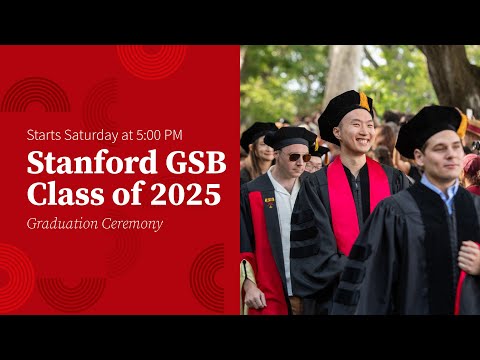
Finally, if you would like to watch my tall ass walk across the stage, here it is! I cross the stage at 1:09:30.
Now for the meat and potatoes. Basically, I left my program for three reasons, only one of which makes sense to talk about publicly. They were, however: one, personal facts about my life; two, a desire to pursue other opportunities, like this; and three, frankly, serious frustration at academia as an industry and the labor market prospects in the field. It is this last part, academia, that I will focus the remainder of this article on.
Academia:
The ivory tower totally lacks a clear purpose in the modern world and is a vestige from a different time in history. It has bundled two goals—education and research—which in principle should be compatible, but in practice they incentivize radically different outcomes, leading to inferior results in both areas. Not only this, but we have decided to fund both of these services primarily through tuition dollars, a large fraction of which is paid for by obligating young people to take out debt.
I myself went to a cheap in-state college for undergrad, worked the entire time, had a scholarship, but since I paid most of my bills, I still ended up with a $200-a-month bill.
Every time I pay it, I thank Science™ for everything it has given me(including the chance to pay this tithe)
Like all institutions which have not been subject to the rigors of the market, the university system has atrophied. It genuinely requires radical reform motivated by first-principles thinking about the purpose of higher education at this point to salvage the project.
Take, for example, the research side of academia. It creates an open space for people to investigate core questions about the universe and humanity, which is incredible. Even disciplines I think are particularly bad, like history, are worth thinking about deeply “outside” of the profit motive. This is to say nothing of fields like chemistry and physics, which have such enormous social ROI that funding them is an unquestionable good.
But I see no reason we couldn’t just fund this directly through something like the NIH or Bell Labs, which wouldn’t require researchers to waste time teaching classes—and let's be clear, the professors themselves think of it as wasting time.
This brings me to the second half of academia: education. The schooling of a people, in particular its elites, is perhaps the most important thing a society does; every generation has to relearn about the world, after all. But for education to be effective the students need to “trust” what they are taught and this trust is breaking down.
More and more, it feels like the “game is up” and everyone knows college is a signaling game. This trend, which probably goes back to at least the 1990s, accelerated after Covid; when classes went online—and learning asymptotically approached zero—but the “value” of college was unaffected. Even if socially this is due to perceptions lagging reality every student today has been told very clearly it is profitable to defect to a low learning equilibrium.
Not only this, but the university system is hilariously dominated by one part of the distribution of political beliefs due to a rigorous process of selection at every stage of the educational system. To the point I’ve noticed it becoming vogue among smug people to think that only left-wingers care about stuff like history, to which I would invite anyone to please open YouTube, Substack, or your local bookstore and see who actually consumes historical content.
No one can honestly think the university system is objective on socially important issues, which fundamentally undermines its ability to act as an impartial educator. On paper, perhaps indoctrination would be acceptable if it was effective, but the monopoly on information that existed with previous generations is decisively broken, and as a result, young people are more and more learning about the world through social media—because even if it is full of lies, it is at least not inconsistent with their lived experiences.
Colleges should teach people, and the fact people waste enormous amounts of time pretending to teach while people pay large amounts in tuition to pretend to learn is BAD.
Outside of a few disciplines at top schools, everyone in college is in college to get a credential—and they know it is both fake and gay.
To bring this all together, it seems crazy to me that we tie an essential governmental service, investment in foundational science, with a totally separate government service, the education of our youth, and then fund both of these by obligating young people, or their families, to pay huge amounts of tuition. Perhaps I could forgive it if our government didn’t require college degrees for many of the most profitable professions.
The only justification for this system is that perhaps having an expert in a field teach a subject is ideal, and I will concede in certain circumstances this is probably true. But anecdotally, I’ll say that the most prestigious professors with the best-paid jobs were never good teachers. In certain fields like the one I was in—which I will get to in a second—the academic discipline has become totally detached from the industry it purports to prepare students for.
“Accounting”:
At Stanford, I was studying for an “Accounting” PhD at the GSB. If your immediate response is to furrow your brows in confusion over what exactly an accounting PhD is, you have had the correct response. The short version is that I studied information economics.
The long version is that in the 1960s, a couple of researchers showed that capital markets reacted to the disclosure of accounting information (Ball and Brown 1968). This was somewhat surprising to economists at the time, who were extremely enamored by the idea that assets totally included all information in their prices; this meant that the aggregation and release of information that was ‘known’ shouldn’t move prices at all. The fact it did was ~interesting~.
This paper, combined with demand for accounting lectures at rapidly growing business schools, prompted the “flowering” of academic accounting. Slowly at first, but with growing speed, the discipline was colonized by economists who had little or no background in the field—I was one of these settler colonialists. By 2022, it had reached the point that I, a person with no accounting experience who has never taken an accounting class, could be accepted into many of the top accounting PhD programs.
Since no one outside of accounting could really say if what was being done was “useful,” and the professors at top schools—who were de facto economists but paid far more—kept saying that it was, the field has just persisted.
I could continue yapping about academic accounting and perhaps another day I will. But what I want to emphasize here is that reform is functionally impossible in any system where the people you are attacking control the measurement system. You basically just have to fire everyone and restart from zero—or at least present that as a viable outcome if they don’t get their act together.
All of this could have been tolerable if I could have gotten in on the rent seeking, a mans got to eat, but with Trump the floor on hiring has fallen out. The stories I’m hearing from friends going on “the market” are bleak. So I decided it was time to leave now on my own terms.
Conclusion:
I’ve moved on from academia and am relieved to have finally climbed off the ivory tower. A part of me wants to return with sword and torch—and perhaps someday I will. But for now, I’m looking forward to the next stage of my life in my natural perch of plebeian American society. It is good to be home.