EU5: Mostly Harmless & Deeply Confused
7/10. It is well worth the money.
Summary: A critical review of Europa Universalis 5 that praises its 80 hours of engaging gameplay but argues it is fundamentally flawed in its approach to historical representation. The game attempts to model history through a universalist materialist lens but fails to explain why Europe rose to economic dominance in the 1337-1836 period, resulting in a simulation where all nations feel identical and historical disparities like European colonialism never emerge.
EU5 is a pretty good game. In fact it is my favorite Paradox release since Stellaris back in 2016, and I got about 80 hours of good, solid, gameplay out of it. However, it is also deeply flawed in a way that is symbolic of recent Paradox games. Namely, EU5 attempts to represent all of history through a universalist materialist lens, and in doing this it struggles to either be a great game or a great simulation.
I’ll get more into this in detail in the article, but suffice it to say the following for now. EU5 has no real model for the “important” historical questions, like why the West conquered the world during the period it attempts to cover, and as a result flattens the entire experience in a way their older, more board game–y and heuristic-based games avoided.
Before I get much more into this review, it is probably worth explaining who “Paradox” is, because no doubt many of you are not 28-year-old nerdy White guys.
Who is Paradox?

Paradox Interactive is a Swedish video game publisher that has come to dominate the “grand strategy”—exactly what it sounds like—niche. Their games each cover a distinct period of time and allow you to play as pretty much any country or person during that era. They have five main franchises:
Crusader Kings covers the period from roughly the Viking era through the Renaissance and allows you to play as a series of rulers from the same dynastic line. CK3 goes from 867–1453.
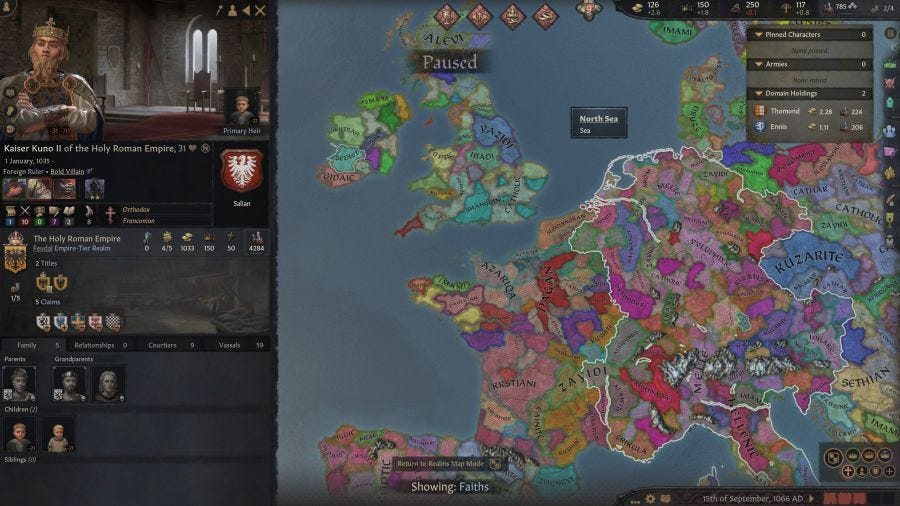
Europa Universalis covers the early modern period through the Napoleonic Wars. EU5 goes from 1337–1836.
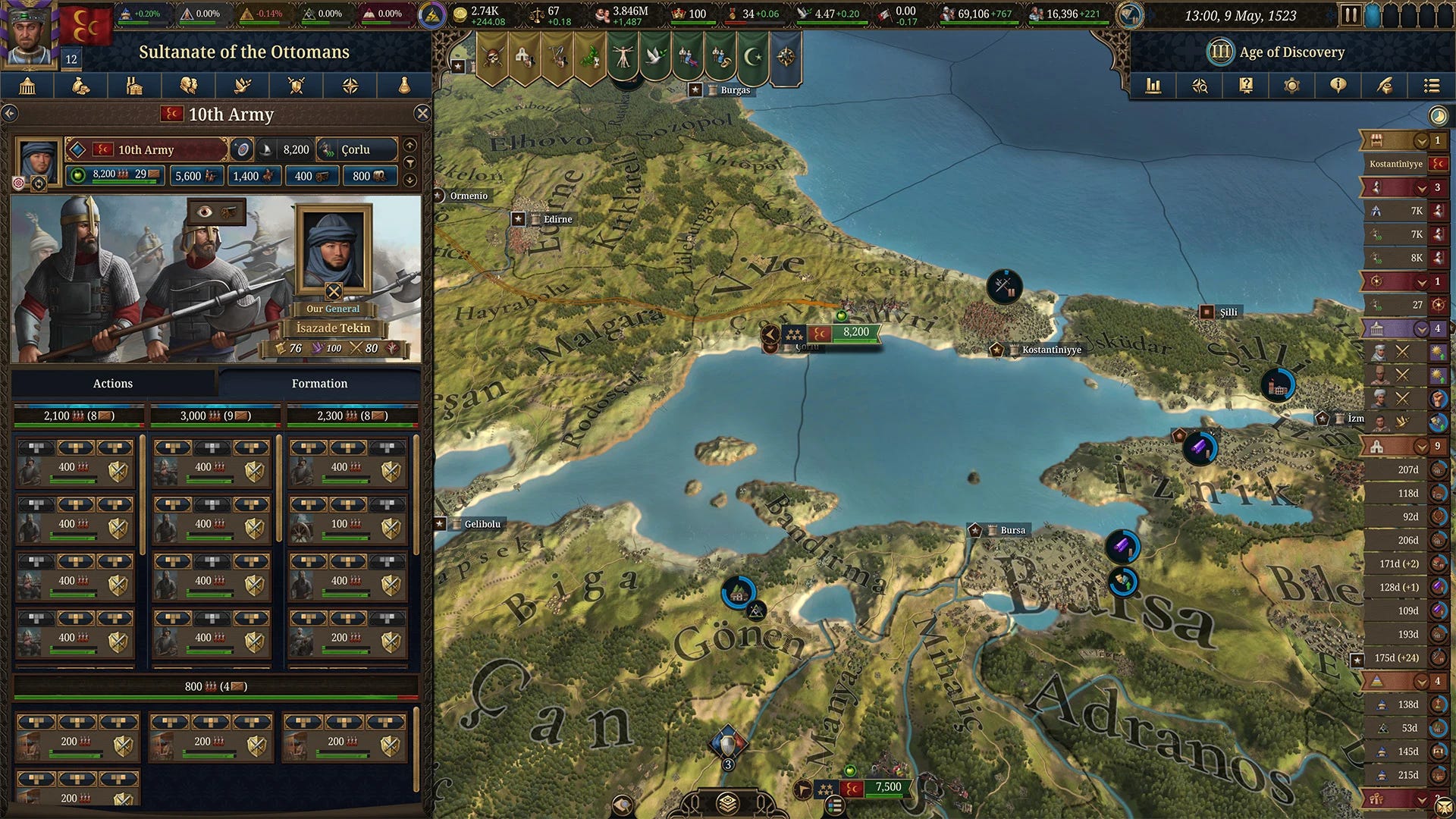
Victoria is, surprise surprise, the Victorian era from 1836–1936.
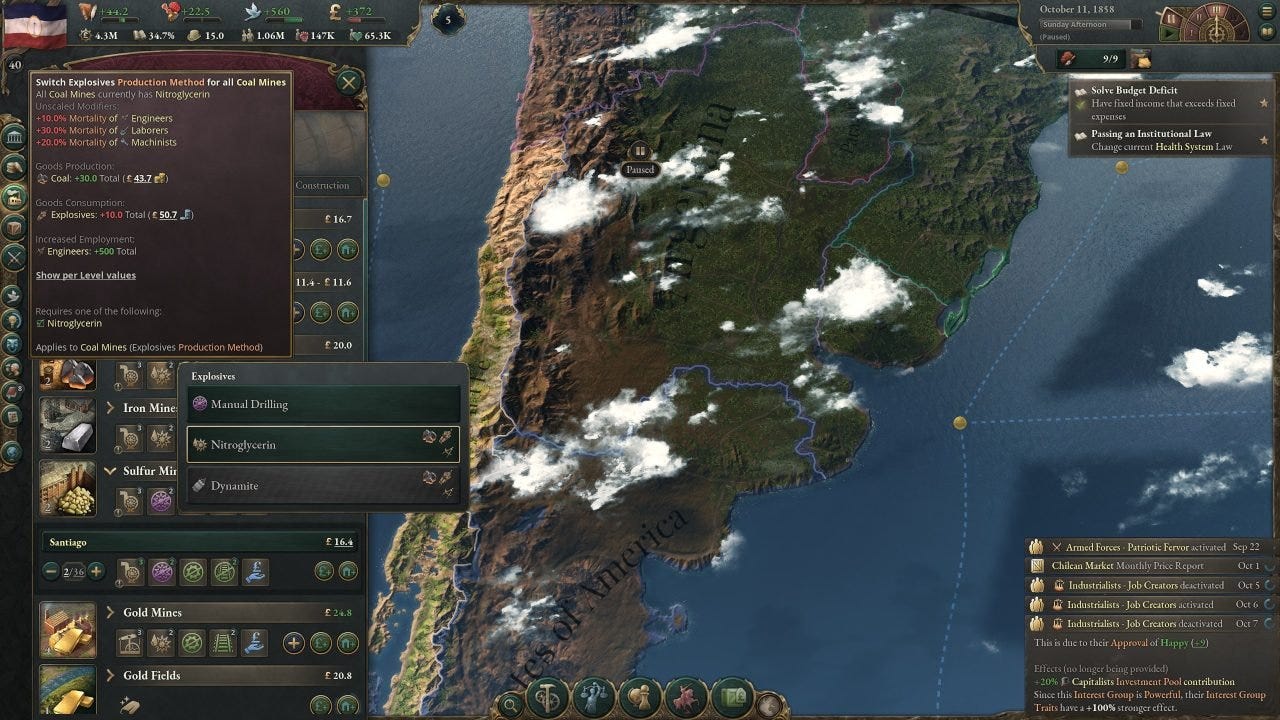
Hearts of Iron is the Second World War, so 1936–1948.
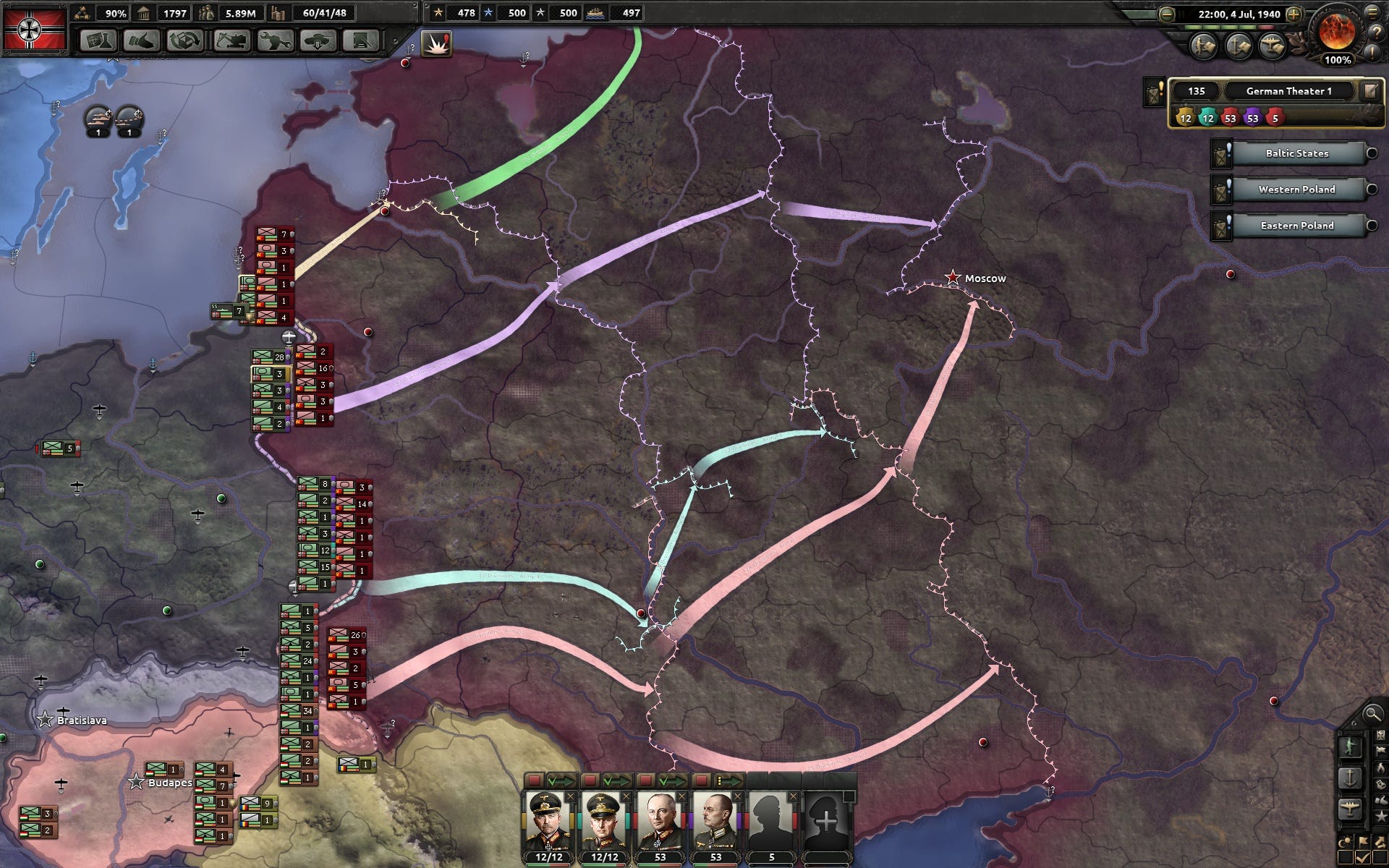
And finally, Stellaris is a science fiction game and begins in 2200.
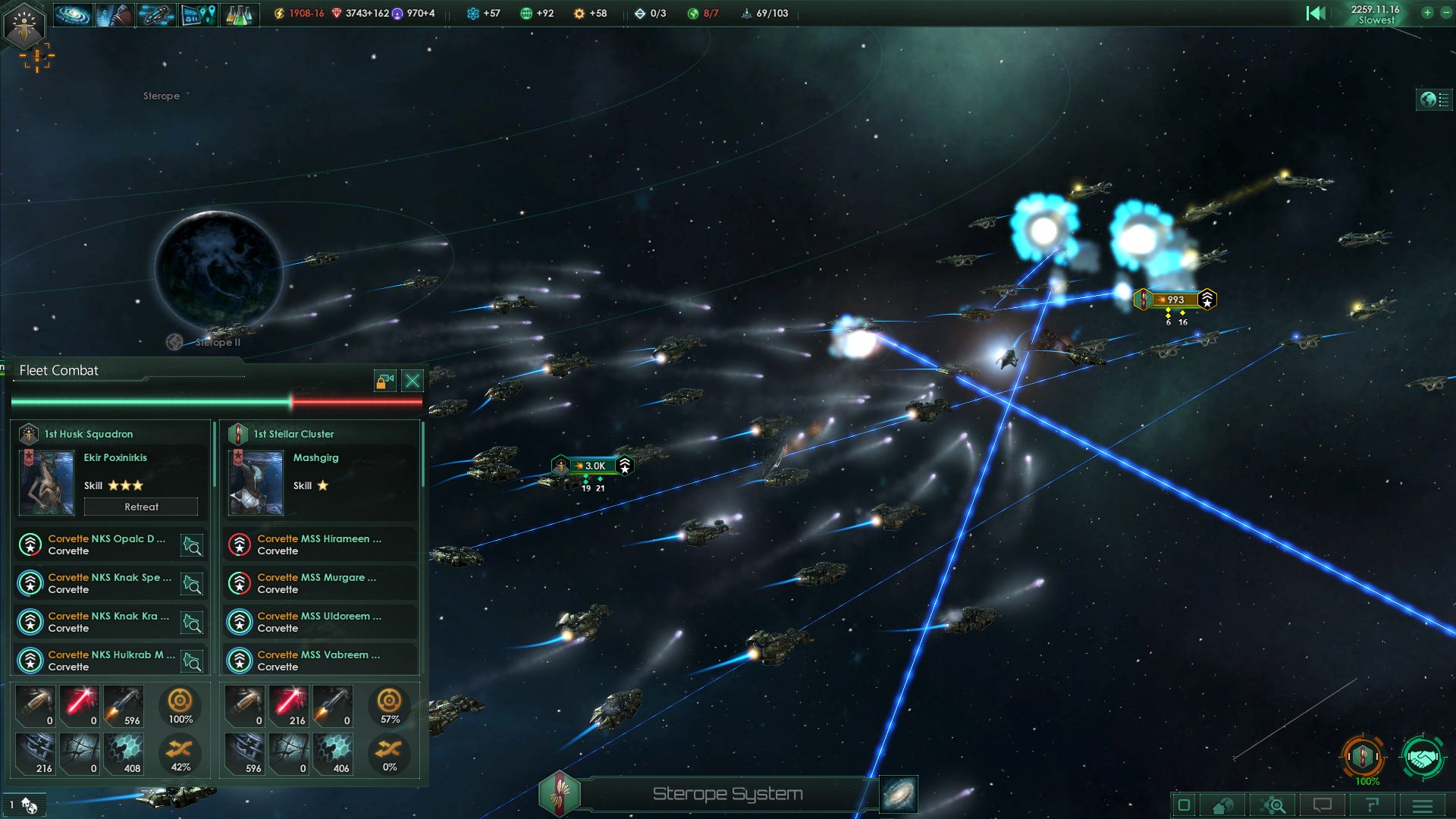
Their games are awesome, and if you ever enjoyed the civilization-building aspects of Civ or the city management systems in a Total War game, you will adore them. Alternatively, if you enjoy history and like to think about how different timelines could have progressed, they represent an existential risk to your life and should be avoided at all costs.
So focusing on EU5.
How EU5 “Plays”
The game is based around a world map which is divided into thousands of locations, which are lumped together into larger provinces. Each of these locations produces an RGO (think of a raw good like timber) and has a population and other characteristics like buildings or climate, etc.
It is the population inside of these locations where the real “meat” of the game lies. Since each individual person is modeled, their social class, culture, religion, literacy, profession, and much, much more are tracked and optimized against. If you conscript an army and the troops starve, your pops will die also. It really is a neat system, and trying to keep them happy and growing is the core gameplay loop.
Pops will produce goods both through their location’s RGO and in buildings, which are then all sold in a “market.” Markets in this game represent a shared economic zone, and it is within these markets that pops are able to purchase food, clothes, luxuries, and everything else they could need. Merchant pops can buy and sell between markets, or you as the player can co-opt this trade power and manually manage the trade yourself.
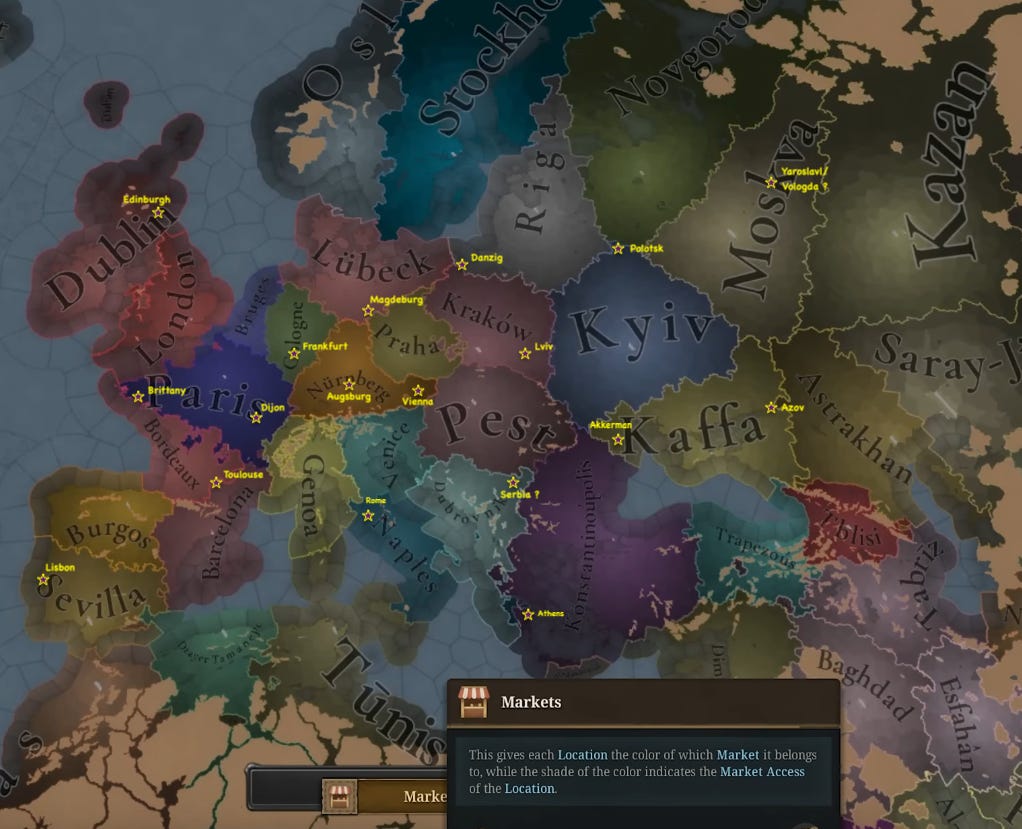
The result of this whole system is an incredibly complex simulation of the early modern era with neat emergent variables. To give an example of one of these:
In a playthrough as Venice, I conquered Egypt and after securing my trade routes began to buy spices in the east and sell them in the west. Because the Indian markets produced huge amounts of goods like spices they were dirt cheap (supply and demand 101), and by contrast extremely expensive in Europe. Naturally I made a tidy profit. Or in a game as Morocco, I found myself accidentally reinventing the triangular trade as I sent slaves to the Caribbean and guns to west Africa.
There are a lot of other mechanics, but the last one I want to touch on is “institutions.” The game ties technology to eighteen institutions which emerge over the course of the game’s six ages—Traditions, Renaissance, Discovery, Reformation, Absolutism, and Revolutions. These institutions are meant to represent the major social or technological advancements that occurred in Europe between 1337 and 1836. Some examples of these institutions are “the Printing Press,” or “Pike & Shot,” or “Global Trade.”
When an age begins, its institutions spawn in specific locations on the map—usually the historical ones—and from there spread out across the world.
The spread is governed by four vectors. First, an institution spreads within a market. Second, it spreads from a country’s capital to its other locations once that country has embraced the institution. Third, it spreads to adjacent locations. And fourth, it spreads by one market importing goods from another market that already has the institution.
To concretize this, you might get the institution of “the Renaissance” as France by trading with Italy, and then when you have embraced it as a country, it would spread to all your locations before spilling over the borders into Spain and Germany.
And here is my main problem:
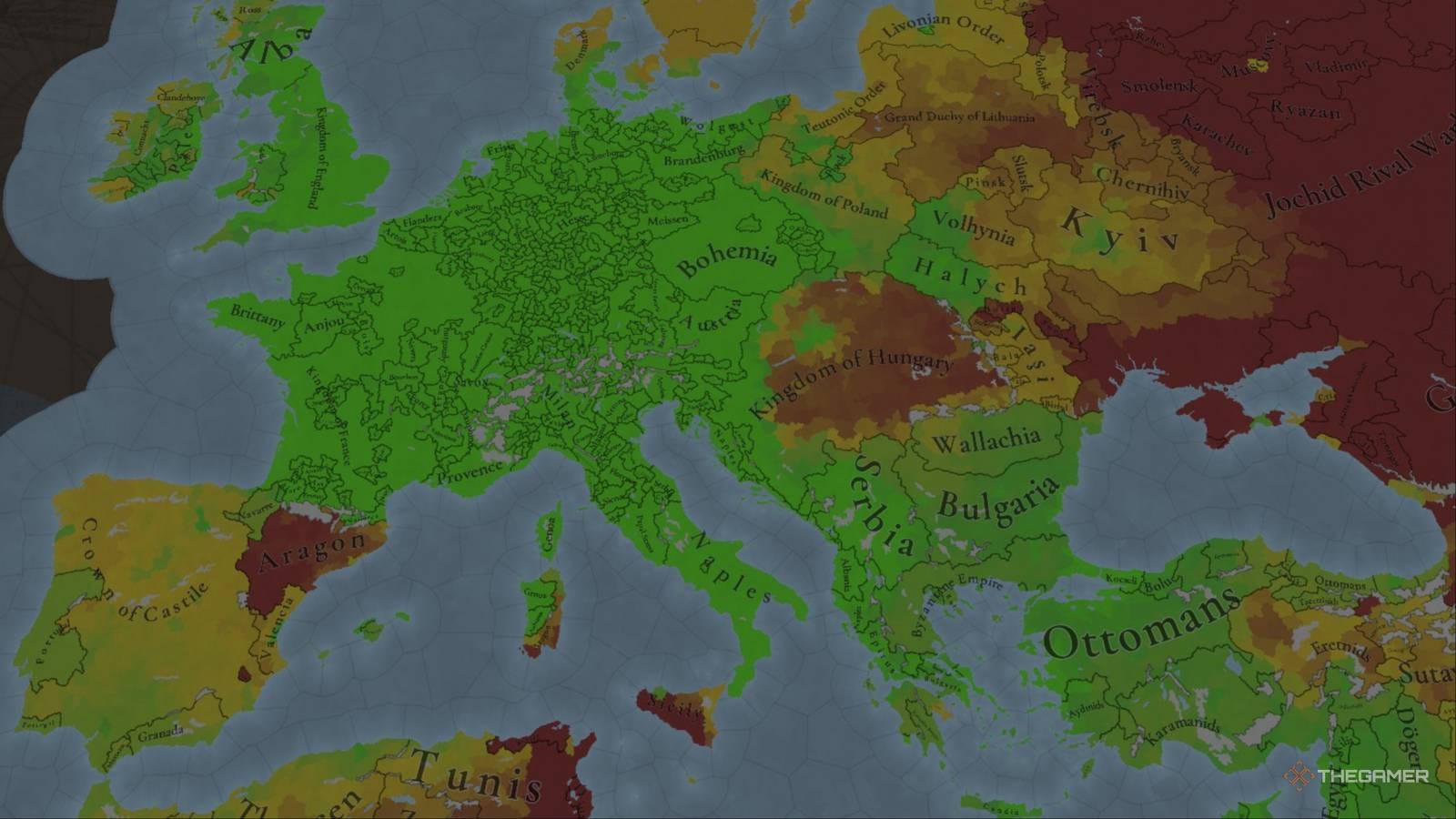
The way institutions spread in this game on paper should make sense, but the actual result is genuinely insane. Basically, in every game the entire world will stay neck and neck with Europe through the 19th century, and it isn’t uncommon for Congolese villagers to be embracing the printing press before it has even crossed the Russian frontier. The issue is that the game is fully committed to a universalist model of history and simultaneously lacks any explanation for “why” Europe rose to such levels of economic dominance in this era. This dynamic has been a big problem in their previous games as well, but since the eras they cover are either short enough that initial starting conditions are dominant or cover periods of closing symmetry—think the Victorian era—it mostly is acceptable. But in EU5 it fundamentally undermines the game.
For example, you never see anything like the British conquest of India or even the Spanish colonization of the Americas because almost immediately the Aztecs will be technological and social peers with the Spanish. The net effect of this on gameplay is that (1) every country feels extremely European, with exactly the same set of social incentives and class structures, and (2) there is no point at which Europe, or any region for that matter, pulls ahead of the world.
The actual origin of why Europe exploded is hotly contested in social science, but the major theorists are closer than it would appear at first. But they all agree on some strong form of path dependence, be it geography or cultural inheritance, something is sticky.
So to honestly model history, EU5 would have to give some reason for why there existed a large and persistent discontinuous drop in economic and social outcomes on the German–Polish frontier for centuries, but it simply refuses to. Now all German and all Polish pops are identical other than their literacy and the hats they wear, both of which can be changed quite easily!
In their older games, they dealt with this problem by simply crudely stereotyping countries and giving them flavor to match said stereotypes. For example, in EU4 at release1, every nation was sorted into a tech group where “Western” was the best and everyone else was on a sliding scale of “bad” based on how backward you would intuitively think their civilizations were at the time. You could change to Western through a costly and time-consuming process, and doing so was basically required to not be steamrolled.
But here’s the key thing. Even if they fixed the institutional spread problem the game still simply lacks regional uniqueness. In older games this was patched over through a crude system of heuristics but Paradox has been trying to do away with that for reasons that probably aren’t surprising. But I seriously think it has come at a loss to the enjoyability of their games. Often, after playing for tens of hours, it will be as if nothing has happened in the entire world and everyone is as frozen in a balance of power as Europe in the 19th century.
When I played EU5, I was reminded of a person I knew back in middle school. There was this guy in my ward (Mormon name for a congregation) in Maryland who was a humanities PhD. He was studying, if I recall correctly, the way in which countries are represented in video games. At first, when I heard this, I was—needless to say—extremely excited because I loved to stereotype countries, and I had come across an expert in this very field.
Sadly, in fact, he was interested in showing why the video game representations were bad and biased. An example he gave me was the bonus to India in Civ4 that gave them a “fast worker,” which was reductive or something to that effect. Well, guys like him won, and the truth, in my opinion, is that the old rough heuristics simply produced better, more interesting simulations, and they should be brought back.
In short: hopefully EU6 is more anti-Polish.
Later they replaced this tech group system with institutions, which behaved exactly like EU5, i.e., they spread across the entire world instantly.