Contra Noah Smith on liberal nationalism
The problem is partisanship
Summary: The essay critiques Noah Smith's argument that America's political dysfunction stems from a deficit in liberal nationalism and national unity. The author contends that the actual problem is partisan polarization and tribal identity fusion, not ethnic tension or elite defection, and that recovering nationalist ideology would fail to address the underlying partisan sorting that divides the country. He argues the solution cannot be institutional or ideological, but rather depends on millions of individual decisions to deprioritize partisan identity and treat political opponents as fellow citizens.
This morning I read Noah Smith’s recent article on liberal nationalism and found myself simultaneously agreeing with him and feeling unsure where exactly it leaves us. These two paragraphs sum up his core argument well:
“The reason American policy is insane right now is because the country is being torn apart. And it’s being torn apart by a political activist class that has abandoned the unifying ideology of 20th century America — the ideology that defeated both fascism and communism, forged a kaleidoscope of ethnicities into a single nation, and sustained U.S. prosperity and economic dominance for 70 years.
Both the rightist and leftist projects in America are doomed to fail. There’s only one ideology that can save this country, and it’s the one that worked for us before. Bring it back.”
In many substantive ways, I think Smith is correct. For a country to work, you need people to put the country before themselves, at least sometimes. In game-theoretic terms, you need citizens to cooperate rather than defect.
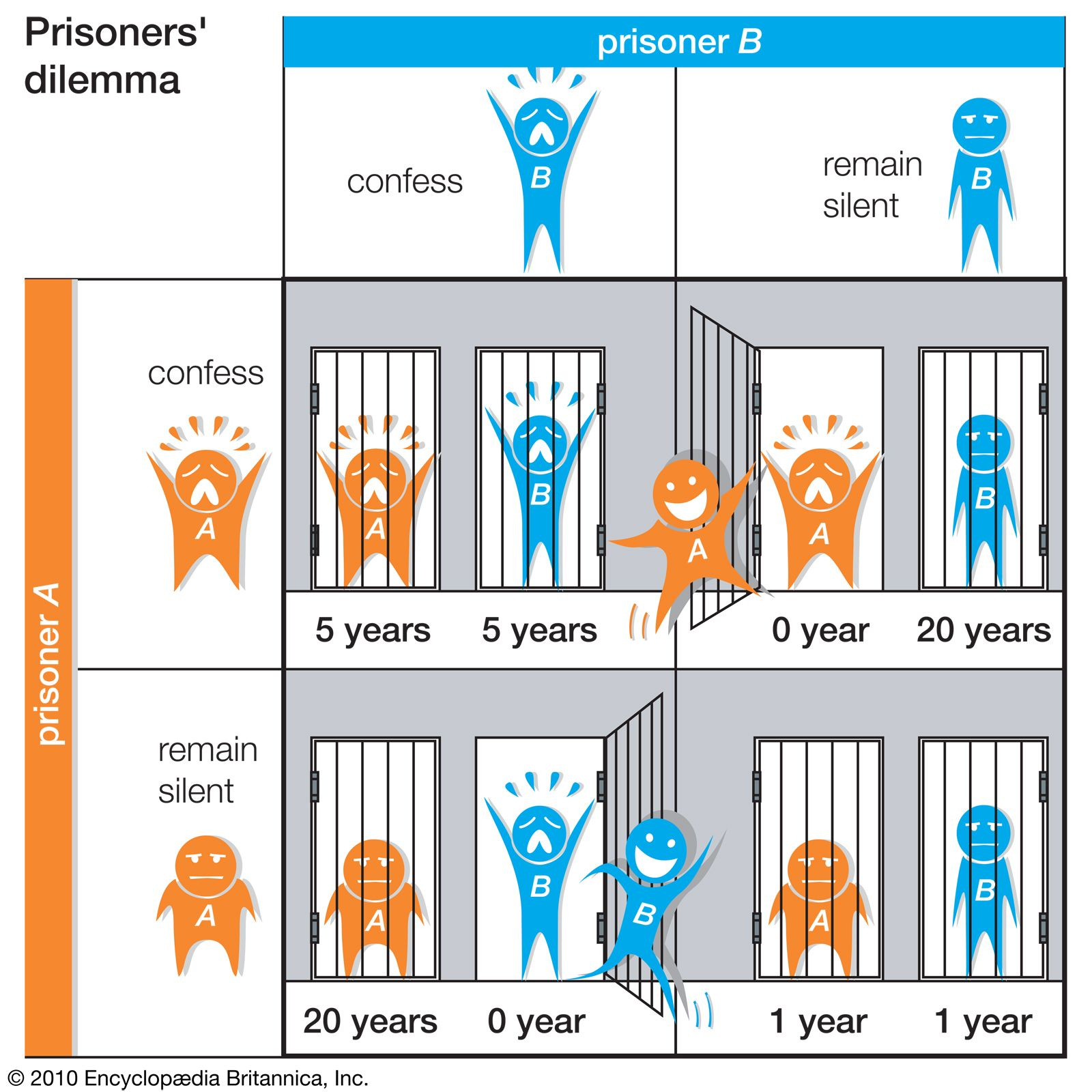
How you get people to do that — and in particular, how you stop elites, who always have enormous exit opportunities, from taking them — is the underlying question of every society in human history. So it seems fair to say that if we could recover that cooperation while keeping all our current social forms and arrangements intact, that would be ideal. On that level, I’m in complete agreement with him.
Where I think he’s wrong is the diagnosis. He sees the core problem as a breakdown in national unity; I see the main axis of tension in contemporary society as political. And because he’s wrong, in my opinion, about the underlying dynamics, he’s also wrong about the cure.
America is not being torn apart by a deficit of national feeling, nor by ethnic difference, nor by the rootlessness of a mobile elite. There is, of course, racial and ethnic tension in this country — but in my experience it exists mostly not among second- or third-generation minority immigrants, but with the American Descendants of Slavery (ADOS). People point to this long-standing wound, which is older than the country itself, as evidence of widespread racial tension, but I simply don’t see it.
Without doxxing myself too much: I live in an area of Northern Virginia where my own street is less than 20% white. There is exactly zero racial tension here. America just isn’t Vienna in 1912.

Open an app like X or Instagram and you’ll be barraged with counterexamples. But honestly ask yourself how much of this tension you encounter in your own life. Do you have a hard time working with, or being friends with, people outside your racial or ethnic group?
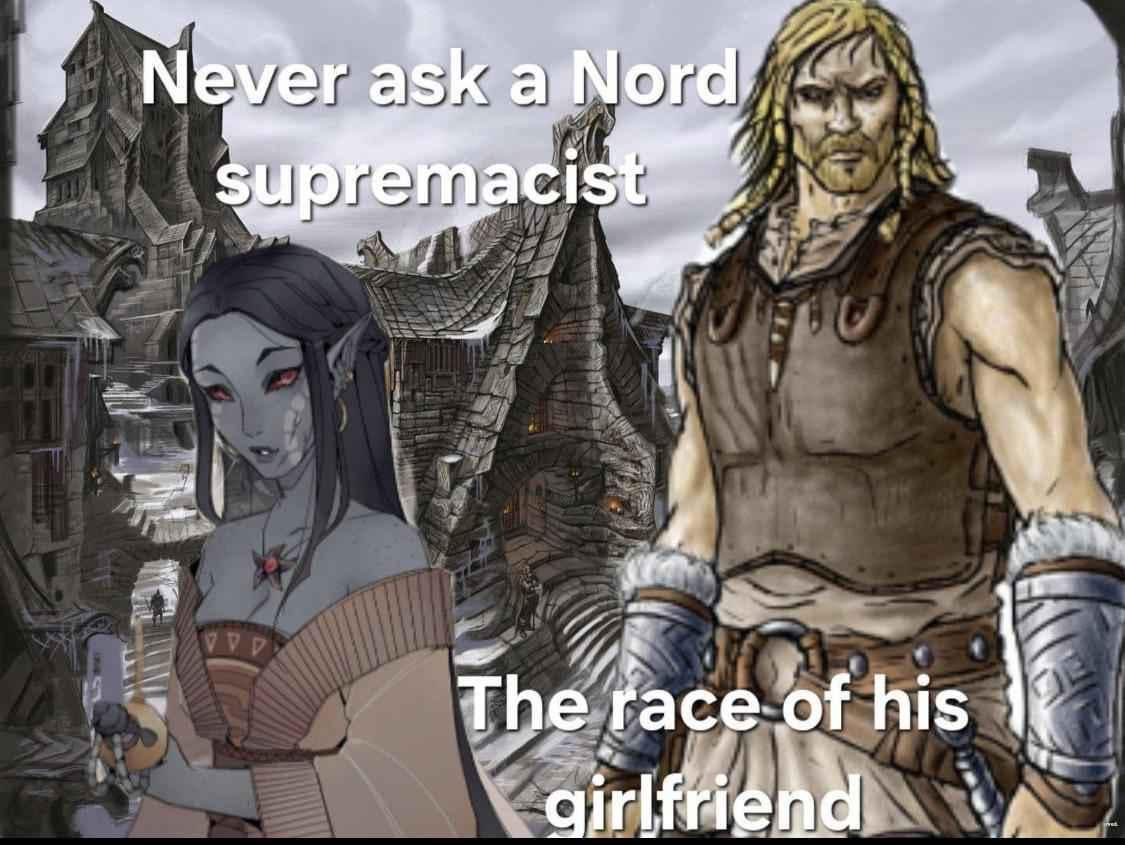
What does though undeniably exist — online and in my own lived experience — is partisan identity as a totalizing, aggressive solvent. I’m far from the first person to say partisan politics is corrosive to American unity, and I’m not saying we should all surrender to the inevitable avalanche of Whig history or MAGA monarchism. Politics is extremely important, and there are a lot of substantive questions worth fighting over. The issue is the way those questions get bundled into a broader cultural and social war, which then eats away at the country’s foundations and undermines our ability to solve problems.
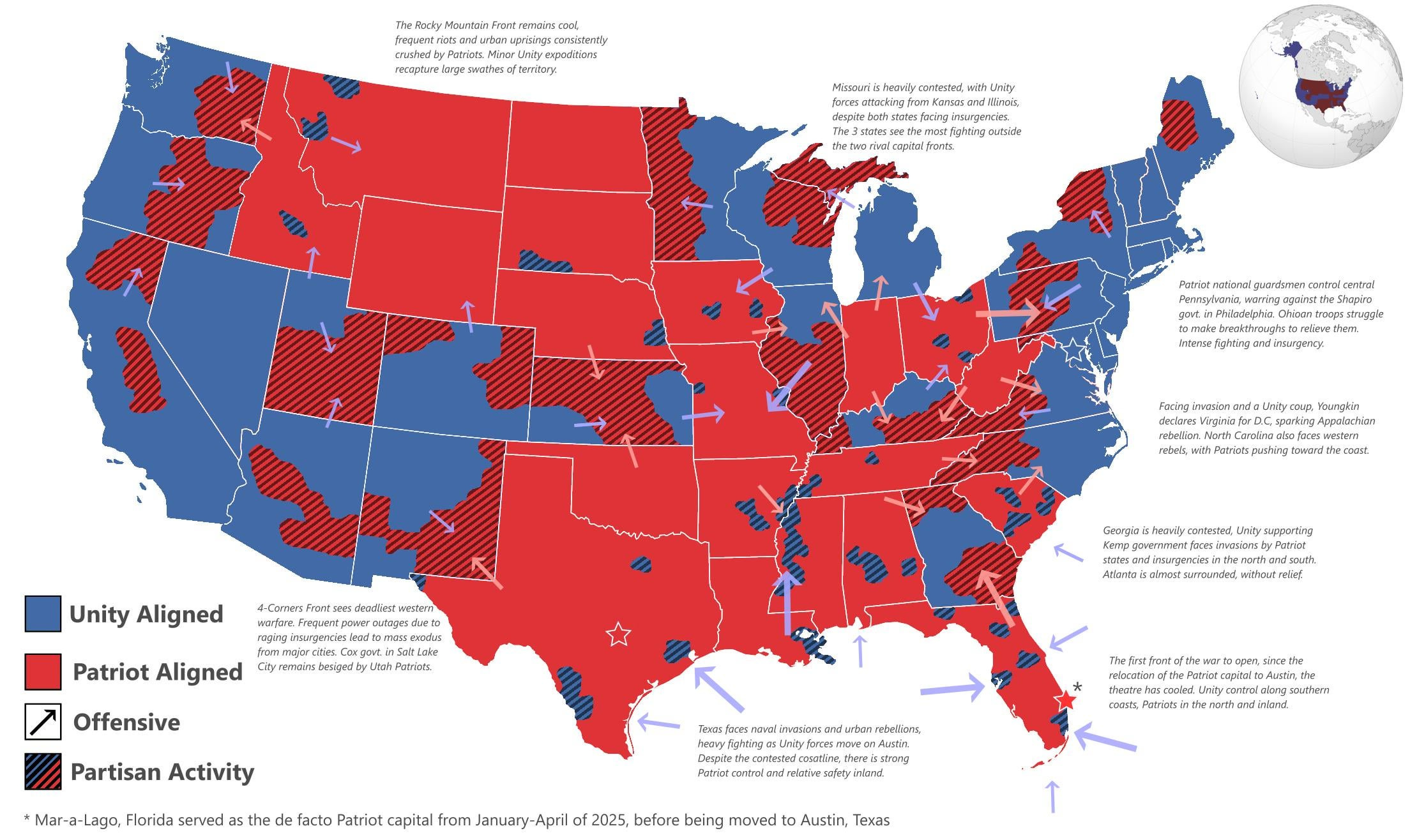
It seems notable that when people are asked to imagine an American civil war, their maps rarely look like a racial dot map — as they inevitably would in any country actually coming apart for lack of a unifying nationalism. Instead they almost always break along party-vote lines.
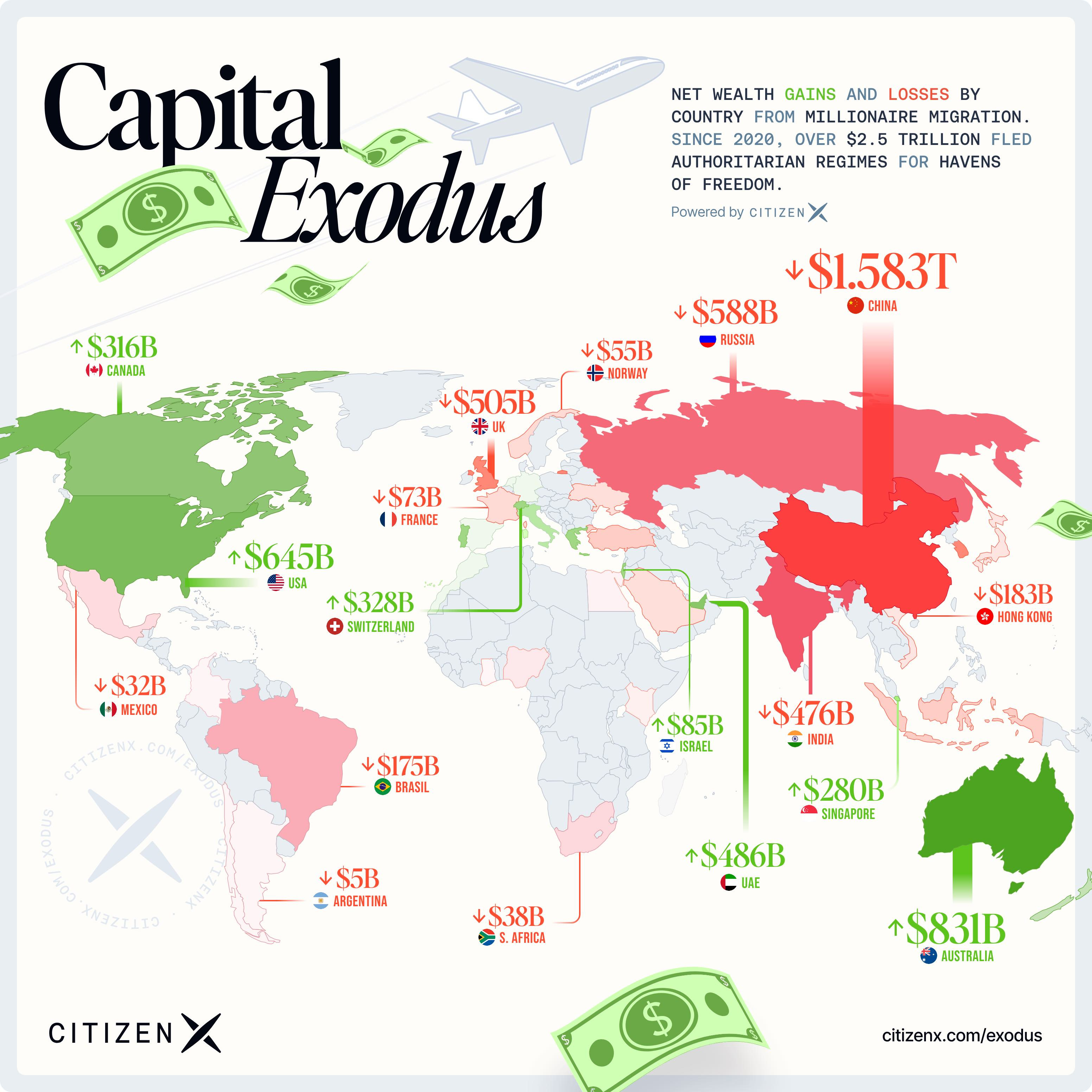
Before going further, it’s worth disposing of the elite-exit story directly, because it’s the version of “national disunity” that sounds most concrete and turns out to be mostly a phantom. Smith frames his whole essay around a fight between “Roman Helmet Guy,” an anonymous right-wing X poster, and Balaji Srinivasan, a millionaire who now posts from Singapore.
Balaji is a real defector, and I won’t pretend the posture he presents is a harmless one — declining the repeated game, taking what a country’s institutions and ordinary taxpayers built and then exiting when the bill comes due, is a genuine social vice. But the question is whether he is representative, and the numbers say plainly that he is not. In fact, the real dynamic almost always runs the other way: rootless cosmopolitans defecting to the United States, rather than our own elites heading for the doors.
If our problem isn’t national disintegration, then — although I would happily accept Smith’s aesthetic of American liberal nationalism — its return would do little to nothing so long as our partisan conflicts persisted. And insofar as it did any good, that would mostly be because it gave our chattering elites a side project other than dividing the plebeians, who are already bound together by marriage, friendship, and trade.
Imagine we succeeded at replacing every progressive lecturer in the country with an ardent liberal nationalist. Would it lower national tensions? Right now all of our lecturers are already in agreement, and that — as someone who was recently in college — seems to have only a minimal effect on reality outside the ivory tower. Any change we tried to implement today would simply be slotted onto the partisan axis, and the public would dutifully sort itself, tribally, into being for or against it.
I remember the early, heady days of Covid, when it was unclear where Trump would land on lockdowns, and everyone seemed to be waiting to either agree or disagree with him no matter where he eventually settled. So if we tried to bring back liberal nationalism, we would simply have a partisan fight about that instead of whatever else we are arguing about right now.
It is this constant partisan sorting that is the real disease, and it is the one that needs to be crushed. And since the thing tearing us apart is ourselves — our own socially created meta-cultural layer — we can only solve it by improving ourselves. A phenomenon composed entirely of millions of individual orientations can only be changed by individual people deciding to change.
Which means the solution, deflating as it sounds, is on you.
I want to head off the obvious misreading. When I say we should turn down the partisan temperature, I am emphatically not saying we should care less about politics, disengage, or let Trump run roughshod.
Instead I’m drawing a distinction between politics — the substance, the genuine, high-stakes disagreement over policy — and partisanship, the fusion of those questions with a tribal identity. You can be as fierce as you like on the merits — vote your convictions, argue them hard — while refusing the partisanship entirely. The two are independent axes, and you can get along just fine with people who vote differently than you do.
None of this is satisfying, I know. There is no policy to pass, no leader to elect, no ideology to install. Smith at least offers something you can rally behind; I’m offering you a mirror. But that is exactly the point. The thing pulling us apart was never housed in an institution that the right reform could fix. It lives in our attention, our habits, and the small daily choice of whether to treat the person across the aisle as a countryman or an enemy. That layer is made of nothing but us, which means it can only be repaired by us — one unwitnessed decision at a time, repeated a few hundred million over.
We don’t need a myth brought back from the last century. We need to stop mistaking the show on our screens for the country outside our doors. The good news, if you want it, is that the country out the door is mostly fine. It’s the show we have to walk away from — and that part, at least, is up to you.
I’m also looking to hit 100 paid subscribers, since I would very much like to get that orange check. So I’m going to attach a 90% discount here for everyone who wants to sign up. I’m going to be raising it substantially when I cross that threshold, so this is the cheapest it will ever be. Lock in an annual subscription for $5 now while you have the chance.