After Trump what's next?
Après MAGA, le déluge
Summary: Peter Banks predicts the Republican Party will fracture into four competing factions after Trump's next term, driven by AI-driven economic growth and the dismantling of American imperial foreign policy. The Heritage wing led by Vance will represent Yarvinite nationalism, the American Dream faction will embrace meritocratic accelerationism, the MAGA movement will embody working-class conspiracialism, and an atrophied RHINO wing will fail to adapt. Despite these ideological divisions, cultural values will revert to 2010s norms while anti-Black racism returns, and Vance is predicted to win the 2028 nomination and general election.
I thought it would be fun to make a silly—and only mostly serious—prediction for the 2028 Republican presidential primary. You should take the following article as half a rumination on what I perceive to be the major factions of the party right now, and half literal predictions about the primary.
Before we proceed, it’s important to make one thing clear. If I were forced to give a point estimate of everything I’m saying actually happening, it would be 0%. That said, I do believe the broad shape of the predictions will prove fairly accurate, in the sense that the forces I’m describing are real. Predictions are helpful from a sort of Popperian falsification perspective. Theories are “good” inasmuch as they are useful, which means we need a way to sort them. In my view, there’s no better method than testing a model's predictions against future outcomes in reality. This is a far better judge of truth than debate.
TL;DR: The Republicans will fracture into three large factions and one small one:
A “Heritage” wing led by Vance, representing the Yarvinite impulse of modern conservatism.
A technocratic wing led by someone like Elon or Vivek, electorally unpopular but highly influential due to its power and high human capital.
A MAGA faction that is conspiratorial and working class.
Finally, an atrophied RINO wing left over from the pre-Trump years.
This prediction assumes nothing truly “crazy” occurs—i.e., no major jolts to the timeline like an invasion of Taiwan or an ASI explosion. Even so, the specific details of how I expect Trump’s next term to unfold still matter. With that in mind, I’ll begin there:
First, I anticipate that America will continue its slow and unsteady march back toward the social values of the mid-2010s. This means political Transgenderism will fade from the mainstream, though the government will not attempt to ban adult medical transitions. It also implies the disappearance of cancellations for doing “normal” things, like saying a slur. Most importantly, it will not mark a return to any hardcore, pre-1990s social conservatism. That moment has passed and cannot be revived.
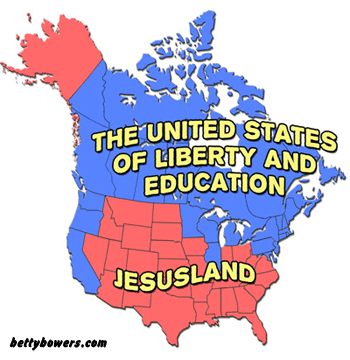
To progressives, America reverting to the cultural norms of the 2010s will be painful and deeply disappointing. For most people, however, it will come as a relief. The truth is that many early progressive causes—such as gay rights or workplace sexual harassment—addressed real problems. The issue only emerged after those problems had been, for the most part, “solved.” Movements don’t stop once they've won; the machinery just keeps running. If I’m reading the average American correctly, what they want is to accept most of the progress made since the Bush Jr. years as part of life—but to stop the feeling of rapid cultural change happening to them from above. Of course, they won’t actually get that, since the change will be driven by the Trump administration, but at least this time the change will primarily involve punishing people they dislike.
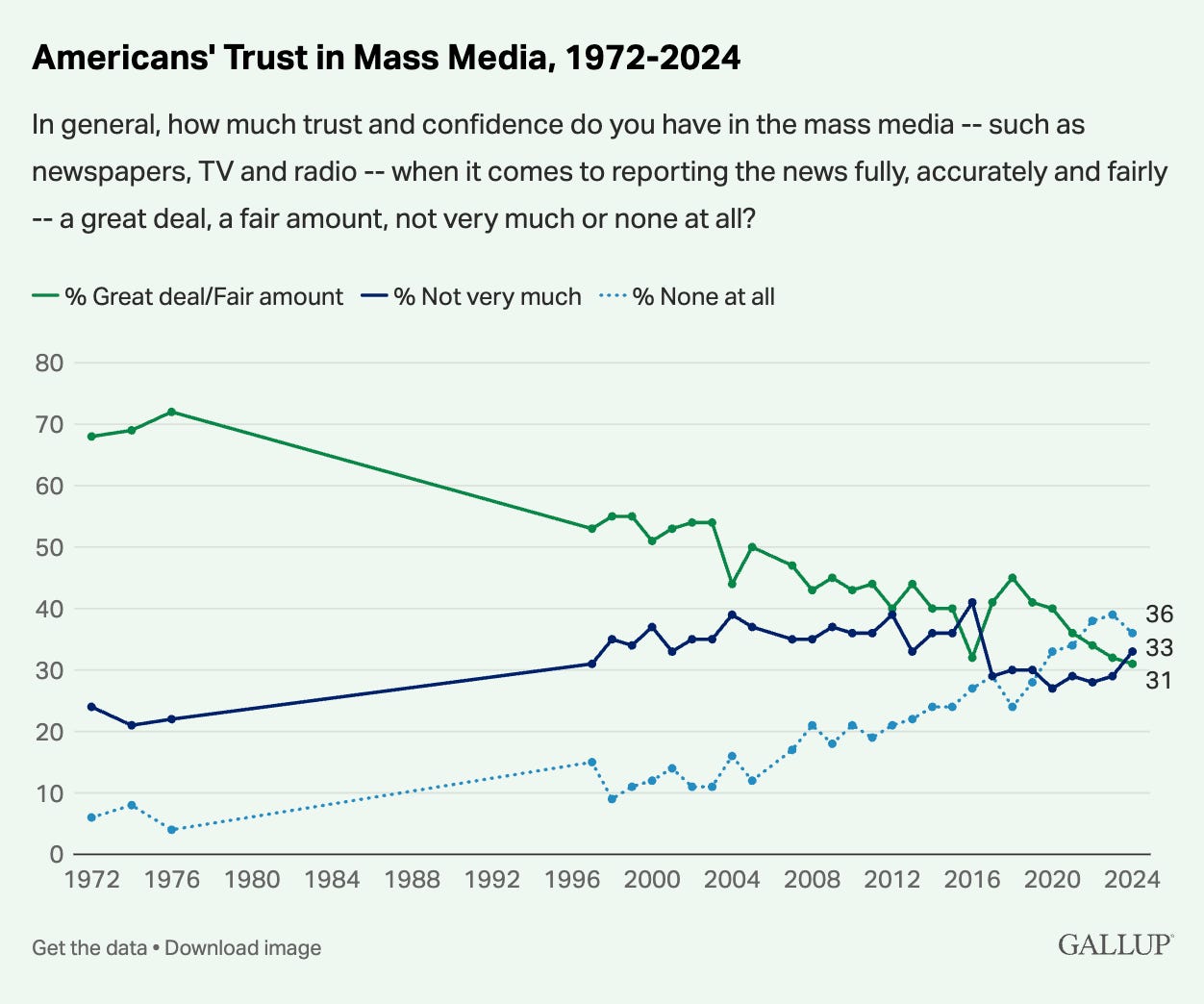
The one major exception to my belief that we’ll merely codify and ossify the culture of the 2010s is this: I expect anti-Black racism to return to public life with unimaginable fury. I’ll expand on this later, but of all my predictions, this is the one I’d bet the most money on. The only scenario in which I see it not happening is if—somehow—Trump becomes wildly popular within the Black community. If that were to happen, they would be granted MAGA in-group status. Personally, though, I find that outcome extremely unlikely.
Second, AI and automation will boost growth rates quite aggressively. You can already see that investment in compute is substantially increasing GDP.
The fact that much of this was facilitated by Biden will mean nothing to the median person. Through a totally undeserved grace of God, it will save the country from insolvency and from Trump’s disastrous tariff policy (see article in Dark Woke essay).
We will hit over 5% real GDP per capita growth rates by the end of Trump’s term. Ironically, I suspect the major political debates will revolve around whether we want to go full steam ahead with the economy—by automating doctors, lawyers, accountants, etc.—or if it would be better for America to slow the AI transformation to keep employment rates high. Since Trump will, of course, take full credit for the boom—and corporate leaders, eager to win his favor, will agree enthusiastically—I expect this debate to adopt increasingly partisan language. A substantial plurality of the Democratic voting base will likely begin to embrace degrowth positions on AI and automation.
That said, this won’t be a “crisis” per se. Things will generally get nicer, and almost all of us will become richer. Yet, it will bring major changes to daily life. For instance, humanoid robots will start appearing in public, performing menial jobs.
The Future—for good (Star Trek) and for bad (Blade Runner)—will finally begin to dawn.
Third, a belt stretching from Cape Town to India will become increasingly unstable. The U.S. did, in effect, operate as the backstop of the international system. Despite our best efforts to convince the world that these institutions were truly multilateral—to the point that we succeeded most thoroughly in convincing our own population—they were, in fact, the face of an extremely gentle and benevolent empire. Trump is in the process of dismantling that empire as I write these words, largely out of personal grievance toward the ancien régime. This unraveling will lead to the anarchy of intergroup competition in many parts of the world.
To summarize my basic model of Trump’s foreign policy in a maxim: America is now less likely to get involved in conventional wars.
Staying out of conflicts—ones you could argue he caused—will be by far his most popular policy, despite the cries of neoliberals and neocons in politics and media. Social media and America's ethnic diversity mean we will never return to true cultural isolationism. Still, these wars will shape our culture in a very “fake” and emotionally distant way. People online like to say “nothing ever happens”; I’d argue things happen constantly in the developing world—they just rarely ripple onto the global stage. Without the watchful eye of imperium, the world will increasingly be filled with more conflicts like Rwanda vs. the Congo or Armenia vs. Azerbaijan.
Taken together, I suspect these three trends will leave Trump about as popular as Obama
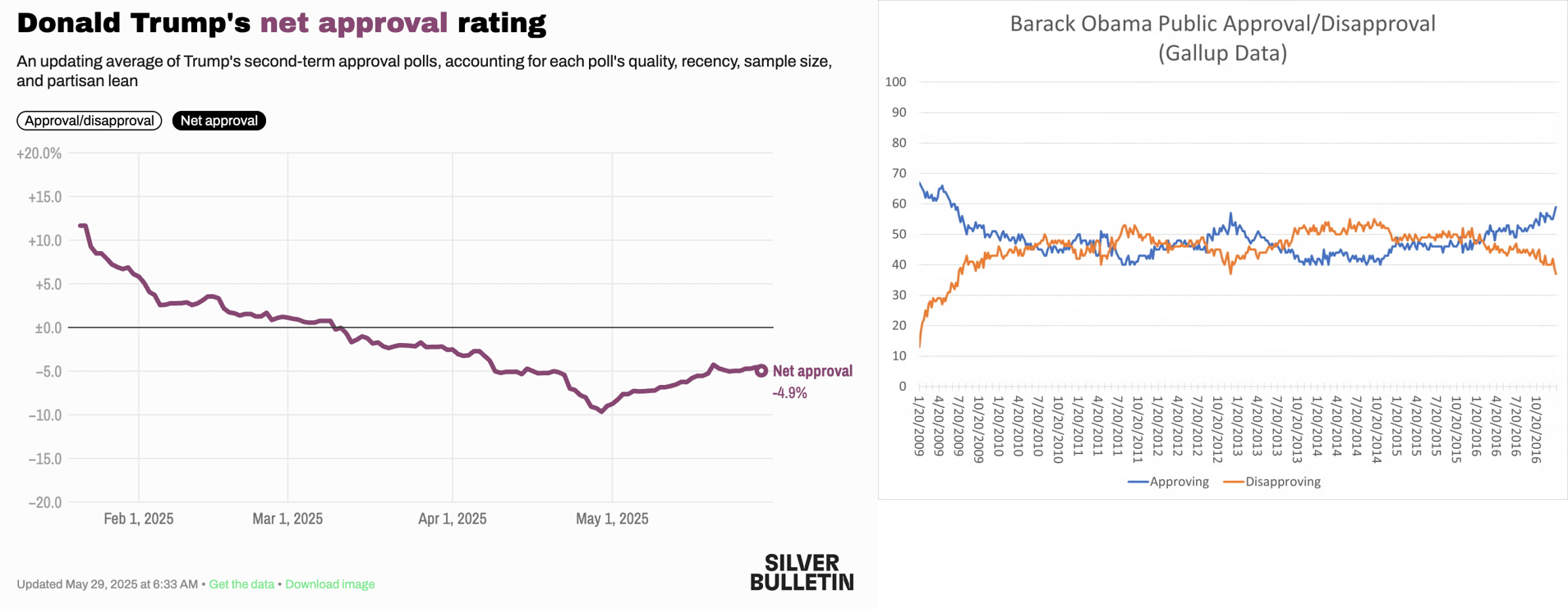
Trump will climb back into the 50s before the 2026 midterms leading to a much closer election than people expect. Republicans will lose the House but hold the Senate—even managing to flip Michigan and Georgia. The Democratic majority will be slim—five seats—and Trump is not impeached again.
When the primary arrives, the national consensus remains almost exactly where it is today: about 40% of the country hates Trump, about 40% loves him, and the remaining 20% has mixed feelings. Yet the world will have been forever changed by this strange Orange Man.
I want to emphasize that these are the factions as they will exist in the primary. I'm not making predictions about how they’d govern. Like all political movements, their idealism will crash headfirst into the hard walls of American political reality.
Factions:
Heritage
Leader: Vance
Fraction of the party: 40%
The Heritage wing of the party will be the most standard nationalist grouping. It will blend right-wing populist language with an effort to build a cultural counter-elite. From a policy perspective, it will resemble the 19th-century progressive movement, with a focus on purifying and revitalizing the “corrupt” political and cultural institutions of the country. Think Teddy Roosevelt or Woodrow Wilson—generosity toward the in-group and hostility toward the out-group.
This will also be the only faction that outright rejects the idea of America as a propositional nation—one built on ideas. Part of this involves a rejection of the multicultural project of the last 60 years, but it also includes rejecting the vision of America as a giant free trade zone (think of how Caplan would want the state to operate). Instead, Vance’s vision is of a country like any other—no special exemption from history. This is reflected somewhat in Trump’s foreign policy as well, though his ‘realism’ is messily intertwined with personal grievance.
I would characterize this group as the Yarvinite wing of the party. They view all states as enormous corporations, where citizens are effectively shareholders. Since most corporations delegate substantial executive authority to a CEO for reasons of complex governance, America should do the same. In short, they want another strong prince to take up the purple.
One implication of viewing the state this way is that immigration and imports become obviously harmful, all else equal. Immigration dilutes shareholder value. Of course, companies offer equity-based compensation regularly—but not randomly, and not out of generosity. Similarly, imports are harmful because they push production outside the firm. While there are sometimes good reasons to outsource, such moves carry real tradeoffs. This logic simply doesn’t apply if you view the state—like a liberal would—as an entity meant to protect the rights of individual humans.
This worldview will be dressed in the language of populism. Vance will never describe the state as a corporation, for example, but it will effectively be the model underpinning their policies.
Ironically, this may also be the least racist of the major Republican factions. Vance and company envision America through a social contract framework that doesn’t require ranking citizens by kin proximity or merit. Microsoft doesn’t ask the race of its shareholders or whether they are morally virtuous—only how to cater to their preferences and vices. The Heritage wing will function much the same. Aside from opposing mass migration, it will largely accept the racial transformation of the country.
American Dream
Leader: Elon Musk (or Vivek, or…)
Fraction of the party: 10%
Unlike the Heritage or upcoming MAGA factions, the American Dream grouping will be the one most explicitly committed to the propositional vision of America—and one of its possible logical conclusions. It will be, by far, the most popular with corporate America. Figures like Elon—mark my words, Hanania will make another pivot in late 2027—or Bezos will all fall under this movement to varying degrees.
Ultimately, there are a few different ways to define what it means to be an American. Broadly: America as a collection of values, America as a collection of people, and America as a collection of institutions. We constantly oscillate between these, and in many ways, the defining debate of this primary is which vision will prevail. On paper, the first—America as a set of values, or more bluntly, an ideal—is the most utopian. But its actual implementation is far messier. If being American is about achieving a certain level of personal virtue or holding the right political beliefs, that implies scattered across the globe are secret Americans yearning to breathe free. But if someone born here is morally repugnant or believes in collectivism—what are they? By that logic, they cannot be American.
Basically, if America is a team—as someone like Elon likes to put it—aimed at recruiting the best of the best from around the world, then it should also fire the underperformers.
This will become one of the most controversial political factions in the U.S. and will draw intense paranoia and hatred from liberals and progressives. The main reason is that they will explicitly reject the idea that American Descendants of Slaves (ADOS) hold a special place in the American project simply due to historical suffering—just as they reject that idea for all ethnic groups, including Whites.
Based on my exposure to people in the Bay Area and Chicago, the Americans most likely to support this meritocratic vision are diverse first- and second-generation immigrants, whose claim to live here is their personal and professional excellence. Since this group arrived after legal discrimination ended, they have almost no sympathy for ADOS, even if they are otherwise socially liberal. Any “racism” from this faction won’t resemble Jim Crow or 19th-century colonialism. It will be something else. If I had to summarize their views on ADOS and race: science documents significant mean group differences among human populations, with traits broadly falling into the pattern Asian/Jew > White > Hispanic > Black. Noticing this—and crafting policy accordingly—is not only morally acceptable, it is morally necessary. Since this differs from White nationalism or White supremacy—what most Americans mean by “racism”—I use the term hesitantly1.
This faction will explicitly run on a platform of aggressive meritocracy across all American institutions. That includes dismantling civil rights laws that hinder standardized testing, strict enforcement of crime laws, educational tracking via exams, and a broader fixation on the policy implications of human genetic research.
In summary, they are the accelerationist faction. Yet, since there’s substantial disagreement about what should be accelerated and how, this group will be an absolute clusterfuck of positions drawn from across the spectrum. Still, they will remain unified by a focus on Vitalism and American Expansion. They will be pro-AI, anti-regulation, pro-space, pro–high-skill immigration, pro–harsh sentencing—and, most darkly, extremely racist toward Black Americans.
My anticipation is that this group will perform the “worst” electorally among the major factions. Yet, due to its outsized power in corporate America and among elite human capital/rationalist types, it will pour enormous resources into politics and endure as a shadow wing of any Republican administration. A dark mirror of the progressive wing of the Democrats, even in defeat.
Also: Vivek seems like a probable leader for this movement—since Elon is ineligible (though perhaps they’ll argue that the Constitution permits it because Elon was spiritually born American).
MAGA
Leader: Trump Jr.
Fraction of the party: 30%
I’ve listed Trump Jr., but it could just as easily be someone unrelated by blood—so long as they are seen as a true-believer MAGA figure. What matters is that they’re viewed as the unofficial mascot of the Trumpian movement. If Trump Jr. runs, I expect Trump will endorse him, which would lead to a wild primary. Otherwise, I don’t think this faction survives beyond 2028. Trump is a bit like Jackson: the movement he birthed will continue, but no one will quite replicate the man’s magic.
Still, for this election cycle, they’ll remain a potent political force. The faction will embody the conspiratorial instincts of the party, meaning it will be light on specific policy positions—beyond broad national-conservative populism. The word fascist is a muddled one, and this movement won’t resemble the totalitarian or authoritarian regimes of the 20th century. It’s better understood in the tradition of America’s past populist waves, from Jackson to the early 20th-century insurgents.
Where this group will diverge from the Heritage wing is in two key ways. First, I expect this faction to be more overtly racist, in a pro-White Boomer sort of way. They’ll oppose immigration explicitly on racial grounds—likely advocating for nationality-based quotas. The increasingly racial politics of the Tech wing will ironically give them cover, allowing them to appear moderate within the party on the issue.
Second, they’ll carry a far more aggressive anti-establishment energy. Think of it this way: Vance and company want to take over Harvard. Trump Jr. and company want to seize its assets and disperse the faculty.
In summary, this will be the enraged working-class wing of the party—resentful of elites and eager to vest their own noble with the people’s power, so he can wage war on elite snobbery in their name.
RHINO
Leader: Glenn Youngkin
Fraction of the party: 20%
There is still a deep bench in this country—particularly among the Boomer WASP population—that remains both fiscally and socially conservative. They are tribally aligned with the Republican Party but tend to hold very negative, albeit private, views of Trump. Although this group isn’t ascendant and stands effectively zero chance of reclaiming control in 2028, I still expect them to contest the primary anyway.
The debates will take on a kind of tragicomic energy, where Youngkin keeps initially agreeing with other candidates—only to realize, too late, that he’s misunderstood them. For example, Vivek might say something like “America is a country of ideals,” which Youngkin will interpret in a George W. Bush sort of way—only to realize Vivek means we should strip suffrage from low-IQ voters. Then Vance will chime in and say that America needs to re-engage with its allies, which Youngkin will again agree with—until it becomes clear Vance means forging closer ties with India and Russia, not the EU. Finally, Trump Jr. will begin praising his father’s economic policy. At first, Youngkin will be excited—until it becomes apparent Jr. is referring solely to lawfare and tariffs.
It’ll be hard not to feel a little bad for this faction—just as in the 2016 Democratic primary, where O'Malley, Chafee, and Webb all seemed to have missed the memo that the decade’s politics were about identity and populism, not milquetoast liberalism—the RHINO wing hasn’t realized that version of the Republicans is simply dead.
Outcome
I think that Vance will win both the primary and the general election in 2028.
Truly we need new vocabulary.